 BETA
Person
Yamashita Tomoyuki
1885–1946 · Army General and Commander of the Malayan Campaign · Empire of Japan
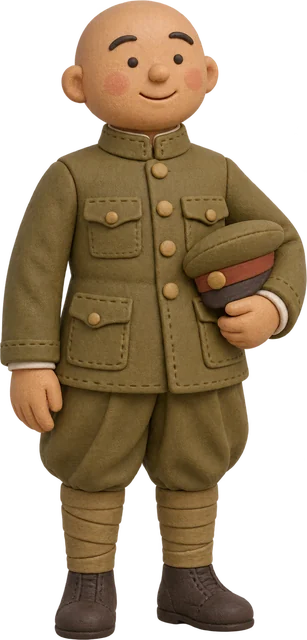
An army general who took the Malay Peninsula and Singapore in 1941-42 and was called the "Tiger of Malaya." After failing to defend the Philippines in 1944, he was executed after a war crimes trial, held responsible for the cruelties of his troops.
Why was a general who had been a war hero sentenced to hang? Yamashita Tomoyuki became famous for quickly taking Malaya and Singapore. But after losing in the Philippines, he was executed in 1946, held responsible for his soldiers' massacre of local people. The idea that a commander is responsible for the actions of his troops became widely known here, and the argument continues even now.
More detail
Two sources checked
Why did a general who was a hero in operations stand on the gallows a few years later? Yamashita Tomoyuki was an army officer from Kochi Prefecture who became commander of the 25th Army in November 1941. He landed on the Malay Peninsula on December 8, advanced south for about 70 days, and captured Singapore in February 1942. The scene of him receiving the British surrender was publicized in Japan as a great victory.
But he was on bad terms with Tojo Hideki and was soon sent to Manchuria, and he stayed away from major battles throughout the middle of the war. In October 1944 he became commander of the 14th Area Army, in charge of defending the Philippines, but the American forces had already landed on Leyte Island. His plan was to abandon Manila and withdraw to the mountains, but some naval units fought in Manila and countless residents died.
After surrendering in September 1945, he stood before a US military tribunal in Manila. He was held responsible for the massacres and abuses committed by his subordinates on the grounds that he "knew and did not stop them, or could have stopped them and did not," and he was hanged on February 23, 1946. The principle of "command responsibility" that came out of this verdict is called the "Yamashita standard" and is still debated today.
The question of whether a commander can be held responsible even for what happened where he did not know is still raised whenever responsibility in the military and in organizations is discussed. His story shows that the glory of victory and the weight of responsibility can be placed on one person together.
Life timeline
- 1885Born in Kochi Prefecture
- 1941Became commander of the 25th Army
- 1942Captured Singapore
It was February 15. - 1942Transferred to Manchuria
- 1944Became commander of the 14th Area Army, in charge of defending the Philippines
- 1945Surrendered and stood before the Manila military tribunal
- 1946Executed by hanging
It was February 23.