 BETA
Person
Yoshida Kenko
1283–1353 · Essayist who wrote the Tsurezuregusa · Kamakura Shogunate
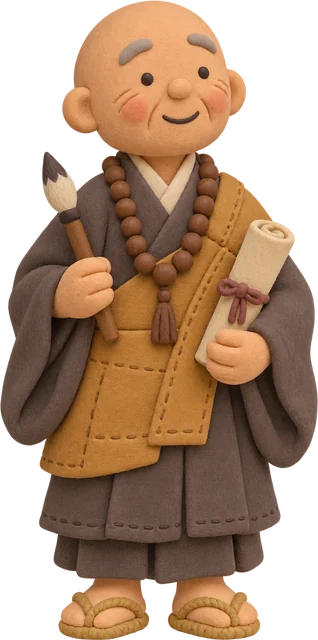
He was an essayist and poet from a Shinto priest family in Kyoto who entered religious life at the end of the Kamakura period. Around 1330 he completed the Tsurezuregusa (Essays in Idleness), leaving a classic of Japanese essay literature.
What do you think about on days when you are not busy? Kenko became a monk and wrote the Tsurezuregusa (Essays in Idleness). He said there is beauty even in what is lacking. It is a book Japanese people still enjoy reading today.
More detail
Two sources checked
If you wrote down the thoughts that come to mind on a day with nothing to do, what kind of book would it be? Yoshida Kenko, whose real name was Urabe no Kaneyoshi, was born into a Kyoto shrine family and worked as a court official.
But around 1313 he became a Buddhist monk and is said to have lived on rice from a field at Yamashina on the outskirts of Kyoto. He was also known as a poet and often took part in poetry gatherings.
The Tsurezuregusa, thought to have been written between 1317 and 1331, begins with the opening line "with nothing to do all day long, I sit before the inkstone." In about 240 short pieces it freely holds stories of people's lives, hobbies, Buddhism, and friends.
He said that there is beauty in what is less than complete rather than in what is perfect. It is not only full-blown flowers and the round moon that are good, he said; there is charm also in falling flowers and a moon hidden by clouds. This idea had a great influence on the Japanese sense of beauty.
Kenko, living through the turmoil of the Northern and Southern Courts period, probably felt the fleetingness of human life all the more deeply. So the book mixes funny stories with pointed advice.
Kenko is thought to have lived until around 1352, after the Northern and Southern Courts period began. This book, still included in Japanese textbooks, seems to say, "Even busy people, look at the sky now and then."
Life timeline
- 1283Born in Kyoto (estimated)
- 1313Became a monk
- 1317Became known as a poet
- 1330Estimated to have begun writing the Tsurezuregusa and completed it
- 1345Recorded as taking part in a poetry gathering around this time
- 1352Estimated to have lived until around this time