 BETA
Person
Yoshino Sakuzo
1878–1933 · Political Scientist and Theorist of Taisho Democracy · Empire of Japan
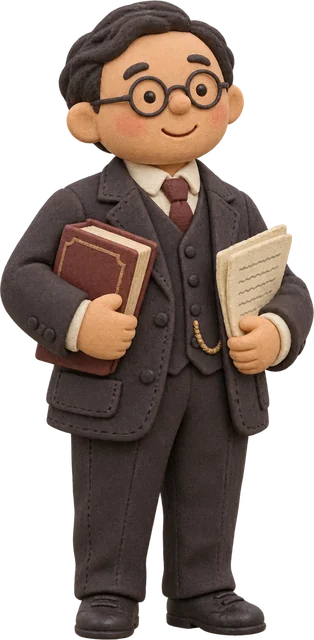
Yoshino Sakuzo, a political scientist from Miyagi, put forward "minponshugi" (rule for the people) in 1916 and argued for universal suffrage and party politics, leading Taisho Democracy. He also criticized the Japanese government over its policies toward Korea and China.
What words did people have to use in a country where it was hard to say "democracy"? Yoshino Sakuzo argued for universal suffrage and party politics with the word "minponshugi" (rule for the people). He also criticized the Japanese government over its policies toward Korea and China. Democracy is not only in the law, but also in the people who speak up.
More detail
Two sources checked
In a country where the word 'democracy' was hard to use, what word did you have to use to talk about democracy? Yoshino Sakuzo was born in 1878 in Miyagi Prefecture, graduated from the Department of Political Science at Tokyo Imperial University, and became a professor in 1914.
The constitution of the time said that sovereignty belonged to the emperor. So the phrase 'the people are the masters (minshu)' sounded dangerous. In an article in the magazine Chuo Koron in 1916, Yoshino put forward the word 'minponshugi' (government based on the people). It meant not who holds sovereignty, but that politics should follow the interests and wishes of the people. His call for universal suffrage and party politics made a great stir.
In 1918, the year of the Rice Riots, he and others formed the Reimeikai (Dawn Society) to spread democratic ideas among the public. The student group Shinjinkai was also influenced by him. When the March First Movement broke out in Korea in 1919, he criticized the policies of the Japanese Government-General of Korea and wrote that Japan should 'win the hearts of the Korean people.' He also criticized the Japanese government over China.
In 1924 he left the university and worked at the Asahi Shimbun until his death in 1933. He also worked to collect historical materials by founding the Meiji Bunka Kenkyukai (Meiji Culture Research Society).
His story shows how hard it is to choose words, and the courage to keep spreading your ideas anyway. Democracy lives not only in laws but also in the people who speak.
Life timeline
- 1904Graduates from Tokyo Imperial University
- 1914Becomes a professor at Tokyo Imperial University
- 1916Publishes his 'minponshugi' article in Chuo Koron
- 1918Helps form the Reimeikai
- 1919Criticizes rule over Korea after the March First Movement
- 1924Leaves the university and joins the Asahi Shimbun
- 1933Dies