 BETA
Person
Pol Pot
1925–1998 · Supreme leader of Democratic Kampuchea · Democratic Kampuchea
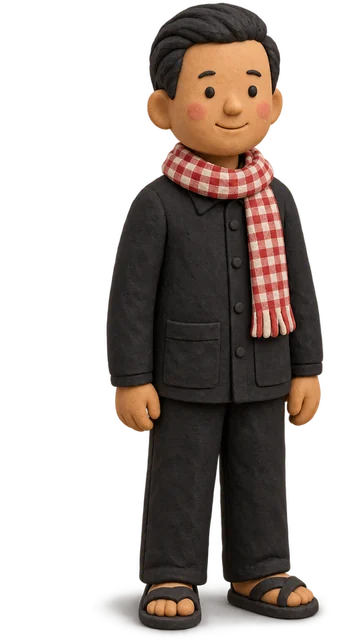
Born in 1925 in Kampong Thom Province, he studied in Paris and became a Communist leader. He ruled Cambodia through the Khmer Rouge regime from 1975 to 1979 and brought about a mass killing in which about 1.5 to 2 million people died.
How can one person's idea change a whole country? Pol Pot learned communism in Paris, came back, and led the Khmer Rouge. Under his regime from 1975 to 1979, a huge number of Cambodians lost their lives, and he died in 1998 without ever being tried. We must respect different ideas and put human life first.
More detail
Two sources checked
How can one person's idea change a whole country? Pol Pot (born Saloth Sar) was born in 1925 in Kampong Thom Province. In 1949 he went to Paris, France, as a scholarship student and joined a communist group. After coming back he worked as a teacher and took part in secret Communist Party activities.
In 1963 he became the party's leader and led an armed struggle from forest bases. Then in April 1975 he took Phnom Penh. He carried out extreme policies, emptying the cities and abolishing money, schools and religion. Under his regime, about 1.5 to 2 million people died from execution, starvation and disease.
After being driven out by Vietnamese troops in 1979, he kept fighting from forests on the Thai border. In 1997 he was locked up by his own comrades. And on April 15, 1998, he died at Anlong Veng without ever standing trial.
He is remembered as the leader of the most terrible regime of the 20th century. The fact that a scholarship student who studied in Paris became the leader who caused his country's greatest tragedy still leaves a heavy question for many people. This story shows how many people suffer when one idea that nobody doubts gains power. That is why we must respect different ideas and put human life first.
Life timeline
- 1963Becomes general secretary of the Communist Party
- 1976Becomes prime minister of Democratic Kampuchea
Related events
- 1970Cambodian Civil War
- 1970Sihanouk and the Khmer Rouge Join Forces (Government in Exile in Beijing)
- 1975Collective Farms, Forced Labor and Hunger
- 1975Fall of Phnom Penh and the Emptying of the City
- 1975The Killing Fields: Mass Murder in the Khmer Rouge Era
- 1975Tuol Sleng (S-21) Prison
- 1975'Year Zero': Ending Money, Schools and Religion
- 1976Democratic Kampuchea Is Proclaimed
- 1977Border War with Vietnam
- 1977Purges Inside the Party and Killings in the Eastern Zone
- 1978Vietnamese Army Enters Cambodia and the Khmer Rouge Regime Collapses
- 1996The End of the Khmer Rouge