 BETA
Person
Suryavarman II
active 1113–1150 · Khmer king · Khmer Empire (Angkor)
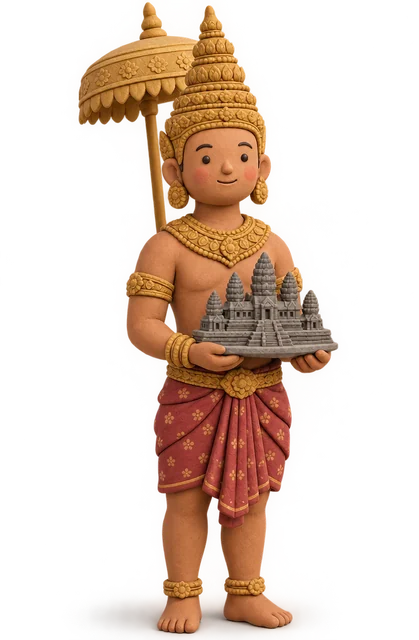
A royal of the Mahidharapura line, he defeated Dharanindravarman I in 1113 and became king, reunited a divided country, and built Angkor Wat. He is one of the kings who expanded the Khmer Empire the most.
What did the king who stacked stones for about 30 years want to achieve? Suryavarman II became king in 1113, united the country, served Vishnu, and built Angkor Wat. His image is carved on the temple walls, and he is thought to have died on a military campaign around 1150. Work done together over a long time lasts even as time passes.
More detail
Two sources checked
What did the king who stacked stones for about 30 years want to achieve? Suryavarman II was a young royal of the Mahidharapura line who defeated Dharanindravarman I in 1113 and became king. He joined the divided country back into one.
Serving Vishnu, he built Angkor Wat over about 30 years. It is as if, instead of a one-semester group project, he planned a masterpiece that takes a whole lifetime. On the south gallery of Angkor Wat, he is carved leading his officials, along with a procession of his army, and it is counted as the first portrait of a named Khmer king.
He attacked Dai Viet and Champa several times and sent envoys to Song China to trade and exchange. It shows the strength that tied the country together reaching outward too. He fought neighbors and also exchanged envoys with faraway countries.
It is not clear when the king was born or when he died. The last inscription was carved in 1145, and after that he is thought to have died on a campaign around 1150. This year is an estimate. After his death he was called by a name meaning “the one who went to the world of Vishnu.”
The king is gone, but Angkor Wat remains to this day. This story tells us that something done with united strength over a long time keeps connecting people even after the people are gone.
Life timeline
- 1145Takes Vijaya, the capital of Champa
Related events
- 1000Preah Vihear Temple on the Cliff
- 1113Construction of Angkor Wat
- 1113Accession of Suryavarman II
- 1116Angkor's Exchange with Song China
- 1128Suryavarman II's Campaigns Against Dai Viet and Champa