 BETA
EventJoseon Period
Making of the Cheugugi and Nationwide Rainfall Measurement
1441–1442 · Joseon · Seoungwan Office in Hanyang and government offices in each province
Today: Seoul, Korea
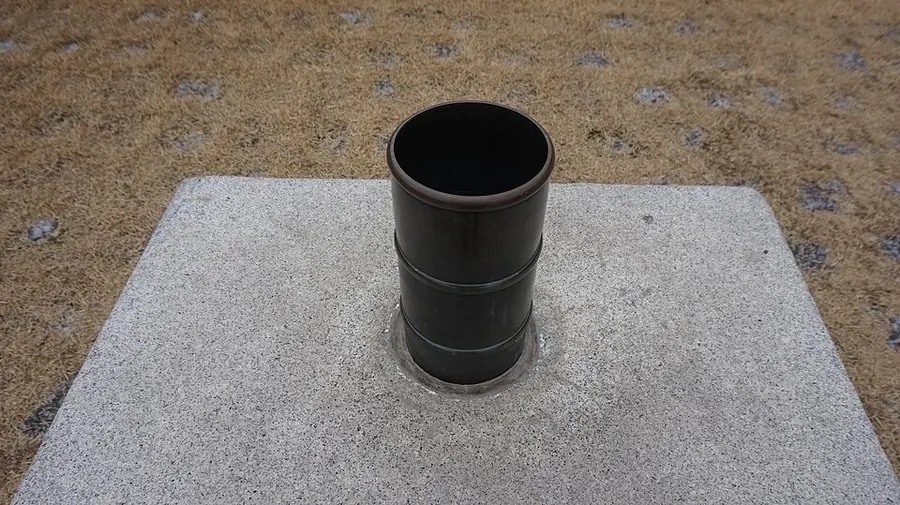
Under Joseon's King Sejong, in 1441 and 1442, the cheugugi was made, a rain gauge that collects rainwater and measures its depth. Gauges of the same size were placed in Seoul and at government offices in every province and county to record rainfall across the country. The system lapsed for a while, was revived in 1770 under King Yeongjo, and lasted until 1907. May 19, the day of the first test converted to the solar calendar, is 'Invention Day.'
What happened
How could people tell how much rain had fallen? Farming depended greatly on the amount of rain, but the method of digging into the ground to estimate it was not accurate. So Crown Prince Munjong collected rainwater in a vessel and measured it, and in 1442 gauges of the same size were placed in Hanyang and at offices across the country, and the depth of rainwater was measured and reported. This system lasted a long time, and to mark the day of the first test, May 19 became 'Invention Day.' The idea of recording in numbers is the beginning of science.
More detail
Two sources checked
Why it happened
How can you tell exactly how much rain has fallen? In Joseon, farming was the heart of the country's livelihood, and the amount of rain decided how the year's harvest would go. Before this, after it rained, people dug into the ground and estimated by how far the rainwater had soaked in. But the results varied greatly with how dry or wet the soil was, so they were hard to trust.
Crown Prince Munjong thought this method was inaccurate, and tested for himself in the palace a way of collecting rainwater in a vessel and measuring its depth. He may have felt that saying 'it rained a lot' was not enough. It is like measuring your height with a ruler and writing down the number, instead of saying 'you've grown a lot.'
What happened
The Annals of King Sejong record that on the 29th of the 4th lunar month of 1441, the crown prince measured rainwater with a copper vessel. In the 8th month of that year the Ministry of Taxation submitted an organized method of measuring, and water-level markers (supyo) for measuring river heights were also set up at Cheonggyecheon and the Han River.
The vessel first planned was 2 ja (about 41 cm) deep, but in the 5th lunar month of 1442 a smaller vessel was given the name 'cheugugi' and rules were set. Cheugugi of the same size were placed at the Seoungwan (the royal observatory) in Seoul and at government offices in every province and county, and when it rained, officials measured and reported when the rain began and stopped and the depth of the water. Measuring with the same-size vessel in the same way across the country made comparison possible. In popular stories Jang Yeong-sil is widely said to have made the cheugugi, but the Annals of King Sejong only record that the crown prince (Munjong) measured the rainwater. The year of invention is also recorded in two ways: 1441 (first test) and 1442 (system fixed).
What came of it
Because it was a system that steadily measured and recorded rain across the country with vessels of the same size and rulers with the same markings, it is counted as an early example of scientific weather observation. The system lapsed for a while, was revived in 1770 under King Yeongjo, and continued until modern weather observation began in 1907.
May 19, the day of the first test (the 29th of the 4th lunar month of 1441) converted to the solar calendar, is today's 'Invention Day.' One small vessel, made to record the sky's unseen workings in numbers, became a distant starting point for how people today record and prepare for the weather.
People in this event
- Sejong — He had the cheugugi made and had rainfall measured across the country.
- King Munjong — It is recorded that when he was crown prince, he measured rainwater with a copper vessel.