 BETA
EventThree Kingdoms Period
Goguryeo Tomb Murals: From Muyongchong to the Four Guardians of Gangseo Great Tomb
570–620 CE (estimated) · Goguryeo · West of Pyongyang, Goguryeo (Gangseo)
Today: Gangseo District, Nampo, North Korea (formerly Gangseo County, South Pyongan)
The people of Goguryeo painted scenes of daily life and imaginary animals on the walls inside tombs, and the Four Guardians of Gangseo Great Tomb are the finest masterpiece among them.
What happened
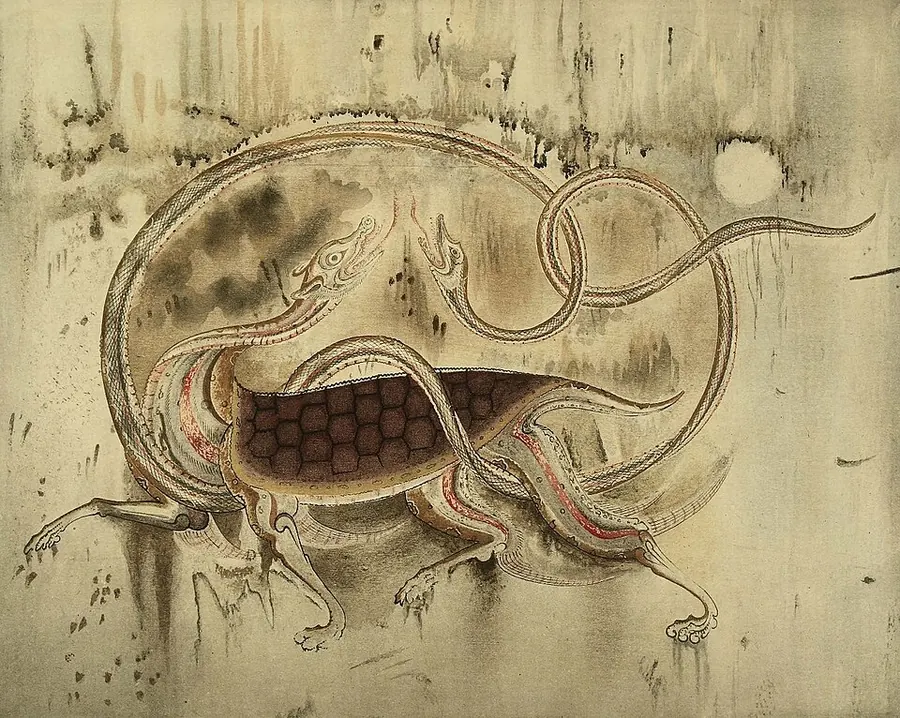
The people of Goguryeo believed that life continues after death. So they painted people dancing and people hunting on horseback on the walls inside tombs. In Gangseo Great Tomb, they painted the four gods, the Blue Dragon, White Tiger, Black Tortoise, and Red Phoenix, with bold brushstrokes. Goguryeo tombs became World Heritage sites.
More detail
Two sources checked
Why it happened
The people of Goguryeo believed that life continues after death. So they made rooms of stone inside tombs and decorated the walls and ceilings with paintings.
The paintings carry the wish that the tomb's owner might continue in the other world the life he enjoyed while alive, and that the paintings would protect the owner from evil forces. More than 100 Goguryeo mural tombs have been identified so far.
What happened
Early murals often show daily life. In Muyongchong at Ji'an, China, there is a scene of several people dancing in a line and a hunting scene of people on horseback shooting arrows and chasing tigers and deer.
Over time, the subject of the paintings changed. In Gangseo Daemyo in Gangseo County, South Pyongan Province, instead of human life, only the gods guarding the four directions were painted large: the Azure Dragon in the east, the White Tiger in the west, the Vermilion Bird in the south, and the Hyeonmu (Black Tortoise, a turtle and snake intertwined) in the north. The paintings, made directly on well-dressed stone walls, have vivid colors and powerful brushwork and are regarded as the greatest masterpieces of Goguryeo murals.
What came of it
Thanks to the murals, we can know vividly what clothes the people of Goguryeo wore, what houses they lived in, and what they enjoyed.
In 2004, the Goguryeo tombs on the North Korean side and the Goguryeo capital and royal tomb sites on the Chinese side were each inscribed as UNESCO World Heritage Sites. They are often compared with the Four Guardian paintings in Japan's Takamatsuzuka tomb.
Links with other countries
Shared with Chinese culture in ideas such as the Four Guardians (sasin); a point of comparison with the murals of Japan's Takamatsuzuka tomb