 BETA
EventThree Kingdoms Period
Making of the Baekje Gilt-Bronze Incense Burner
600–650 CE (estimated) · Baekje · Temple at Neungsan-ri, Sabi, Baekje
Today: Neungsan-ri Temple Site, Buyeo-eup, Buyeo, South Chungcheong
The Baekje Gilt-Bronze Incense Burner holds the world of immortals and is the finest masterpiece of Baekje metalwork.
What happened
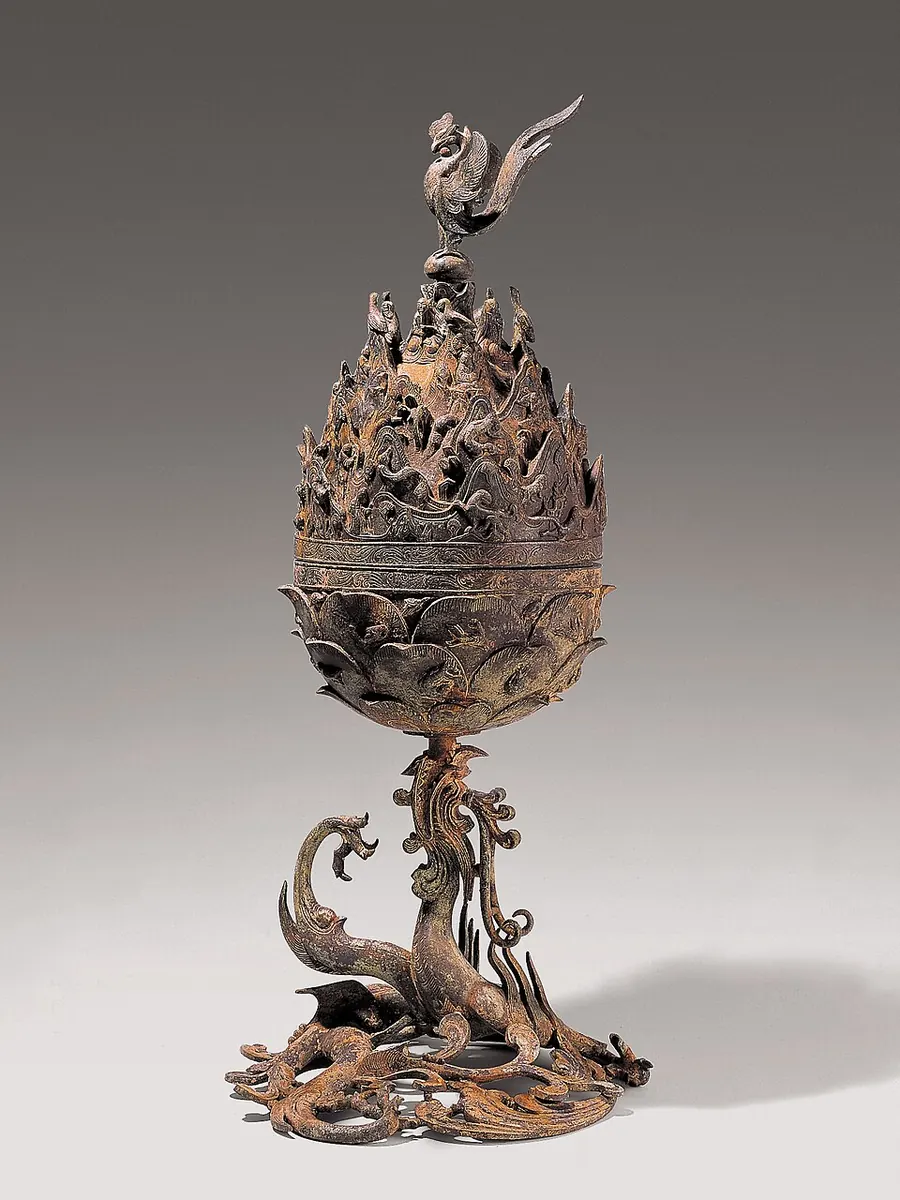
In 1993, a golden incense burner was found in the mud of an old temple site in Buyeo. It is about 62 cm tall, with a phoenix at the top and a dragon below. Among the mountain peaks on its lid, musicians playing instruments and dozens of imaginary animals are carved. It is a national treasure that shows Baekje's outstanding metalworking skill.
More detail
Two sources checked
Why it happened
While believing in Buddhism, the people of Baekje also took in Taoist thought, which pictures an ideal world where immortals live.
The royal house burned incense when holding ancestral rites or performing major ceremonies. This censer is thought to have been made for use at such occasions.
What happened
It was found in December 1993 in the mud of a water pit at the Neungsan-ri temple site in Buyeo. It seems that someone hid it in haste when Baekje fell. The mud sealed out the air, so it remained almost undamaged for more than 1,300 years.
It is 61.8 cm high and weighs 11.8 kg. At the very top stands a phoenix with spread wings, and at the very bottom a dragon twists its body and holds up the body of the censer, shaped like a lotus bud.
The lid has 74 layered mountain peaks, and between them are carved five musicians playing instruments, a rider on horseback, tigers and deer, and imaginary animals. When incense is burned, smoke rises through small holes behind the peaks.
What came of it
This censer shows at a glance Baekje's outstanding metalworking skill and delicate artistic sense. It is regarded as having started from the Boshan censer (Baksan hyangno) of China's Han dynasty but newly made in Baekje's own form.
It is designated a National Treasure and is held at the National Museum of Buyeo. At the Neungsan-ri temple site where the censer came out, a sari reliquary inscribed with a statement that the temple was founded in 567 was also found.
Links with other countries
Continuation and adaptation of the tradition of the Han-dynasty Boshan censer of China