 BETA
EventJoseon Period
Battle of Hansando
1592 · Joseon · Gyeonnaeryang and the sea off Hansando Island, Gyeongsang Province
Today: The sea off Hansan-myeon, Tongyeong, South Gyeongsang Province, Korea
On the 8th day of the lunar 7th month of 1592, Yi Sun-sin lured Japanese ships out of the narrow Gyeonnaeryang Strait, in front of Geoje Island, into the open sea off Hansando Island and crushed them with the crane-wing formation. This naval battle let Joseon protect its sea routes and its granary region.
What happened
Does the stronger side always win at sea? In 1592, when the Japanese navy tried to wipe out the Joseon navy, Yi Sun-sin lured the enemy out of the narrow Gyeonnaeryang Strait into the wide sea off Hansando Island. Then he spread his ships out like a crane opening its wings and won a great victory. Thanks to this win, Joseon kept its sea routes and its rich grain lands. It shows how important it is to think about where to fight.
More detail
Two sources checked
Why it happened
The Joseon navy kept winning at sea. Why couldn't Japan simply leave it alone? After the Imjin War began, Yi Sun-sin's Joseon navy won one battle after another, at Okpo, Sacheon, Dangpo and elsewhere. Japan wanted to send food and troops by sea toward the west coast to meet its army on land, and once that route was blocked, it became a big problem.
It was like lunch delivery trucks getting stuck on the road so that the school cafeteria stays empty. Hideyoshi ordered his naval commanders to destroy the Joseon navy. Wakisaka Yasuharu set out first with 73 ships, and Kuki Yoshitaka followed with 42.
What happened
On the 6th day of the lunar 7th month of 1592, 48 ships from Jeolla Province, led by Yi Sun-sin and Yi Eok-gi, joined 7 ships from Gyeongsang Province under Won Gyun, making 55 ships in all. The next day, a herdsman named Kim Cheon-son told them that more than 70 Japanese ships were anchored in Gyeonnaeryang, the narrow stretch of sea between Geoje Island and the mainland.
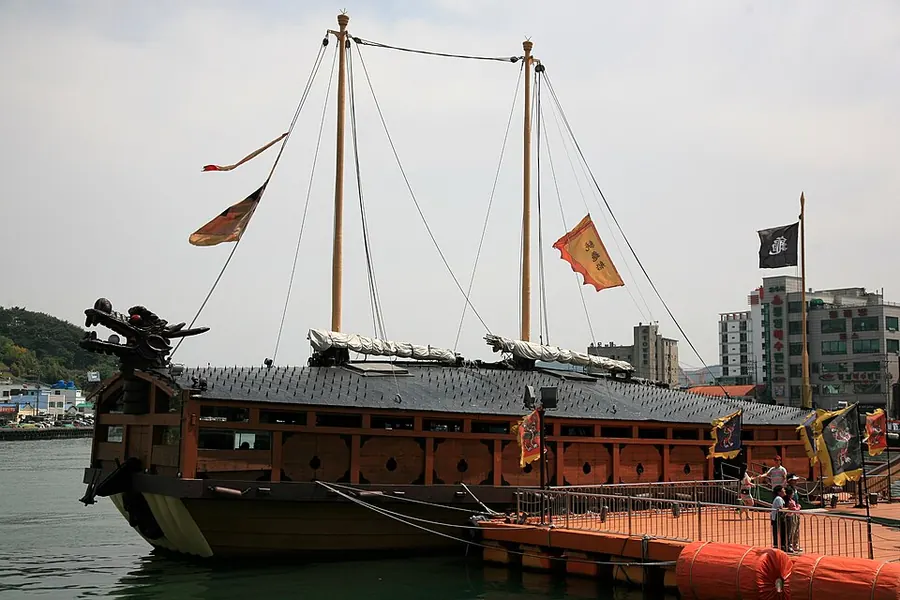
But Gyeonnaeryang was narrow and full of hidden rocks, so the big Joseon ships called panokseon could hardly move there. Yi Sun-sin could probably see that fighting there would put his own ships at a disadvantage. On the 8th, he sent five or six ships to pretend to fight and then pull back, luring the enemy into the wide sea off Hansando Island. It was like calling an opponent out of a narrow hallway where you were playing hide-and-seek into a big playground.
Once the Japanese ships were out in the open water, the tide turned. The Joseon ships spread out wide like a crane opening its wings (the crane-wing formation), surrounded the enemy and fired their cannons. Forty-seven Japanese ships were burned or smashed and 12 were captured, and Wakisaka fled with the rest of his ships.
What came of it
After this battle, Japan stopped fighting head-on at sea and changed its plan to guarding its castles along the coast. Joseon protected the granary lands of Jeolla and Chungcheong provinces and the west-coast sea route, and gained the strength to keep going in the war.
The Battle of Hansando is counted among the three great victories of the Imjin War, together with the Battle of Jinju and the Battle of Haengju. The stronger side does not always win. This sea reminds people today that careful thinking about where to fight can decide a battle.
People in this event
- Yi Sun-sin — He surrounded the enemy in the crane-wing formation and destroyed 47 Japanese ships.
- Won Gyun — He led 7 ships of Gyeongsang Province and fought together.