 BETA
EventThree Kingdoms Period
Silla Gold Crowns and Stone-Mound Wooden-Chamber Tombs (Hwangnamdaechong and Cheonmachong)
450–520 CE (estimated) · Silla · Geumseong, Silla (Daereungwon area)
Today: Hwangnam-dong, Gyeongju, North Gyeongsang
Splendid Silla gold crowns poured out of the large tombs of Gyeongju from the 5th and 6th centuries.
What happened
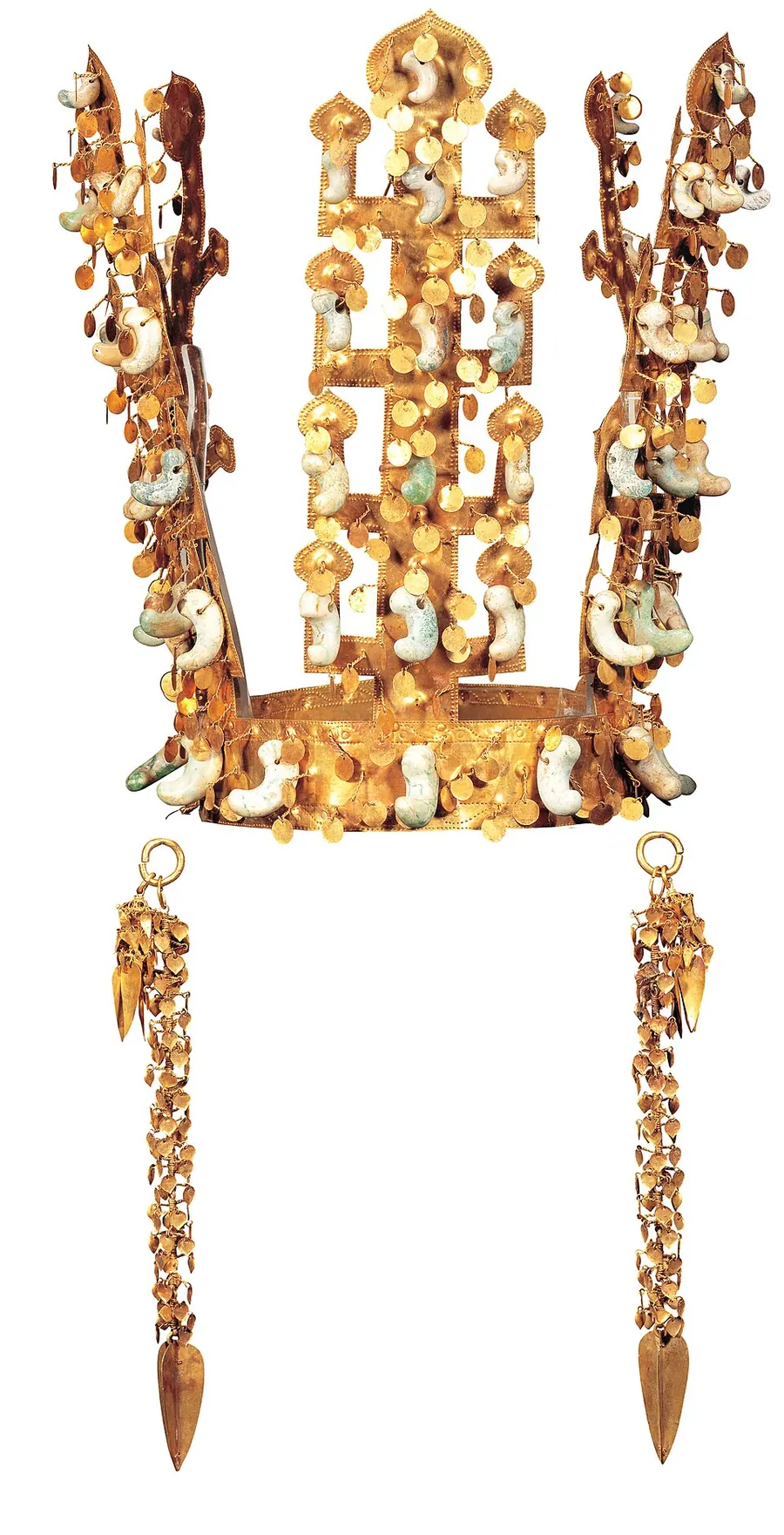
Silla kings and royal family members were buried in large tombs where stones were piled over a wooden chamber and covered with earth. Thieves had a hard time getting in, so treasures like gold crowns were left just as they were. The gold crowns have decorations shaped like tree branches and deer antlers. At Cheonmachong in Gyeongju, more than 10,000 relics came out, including a gold crown and a picture of a flying horse.
More detail
Two sources checked
Why it happened
From the 4th to the early 6th century, Silla kings and royal family members were buried in 'stone-mound wooden-chamber tombs' (dolmuji deotneol mudeom). In these, a wooden chamber (deotneol) was built above ground, covered thickly with river stones, and then heaped over with earth into a round mound.
When the wooden chamber rotted and collapsed, the stones above settled down and filled the inside of the tomb tightly. So it was very hard for tomb robbers to dig in, and treasures such as gold crowns survived intact.
What happened
Hwangnamdaechong in Gyeongju is a twin tomb with two mounds joined north to south, and at 120 m in length it is Silla's largest tomb. In the excavation of 1973 to 1975, a gold crown was found in the north tomb. It has upright decorations in the shape of the character 出 and decorations shaped like deer antlers, hung with curved jade and spangles. A belt inscribed 'buindae' (belt of a lady) was found in the same tomb, so it is thought to be the tomb of a queen.
The south tomb held a man of about 60, and a gilt-bronze crown and a silver crown were found there instead of a gold crown. In Cheonmachong, excavated first in 1973, 11,526 items were found, including a gold crown and a saddle flap painted with a flying horse (the Cheonmado).
What came of it
Six Silla gold crowns have been found in Gyeongju in all. This shows that not only kings but also queens and royal family members wore gold crowns. The tree-branch and deer-antler shapes are interpreted as linked to the culture of the nomads of the northern steppe.
In the south tomb of Hwangnamdaechong, some bones of a young woman buried along with the occupant were also found, showing that Silla had the custom of sunjang until King Jijeung banned it.
Links with other countries
Interpretation linking the tree and deer-antler crown tradition of northern nomadic cultures; the arrival of glass vessels from the Western Regions.