 BETA
EventThree Kingdoms Period
Building of the Nine-Story Wooden Pagoda of Hwangnyongsa
643–645 CE · Silla · Hwangnyongsa Temple, Geumseong, Silla
Today: Hwangnyongsa Temple Site, Guhwang-dong, Gyeongju, North Gyeongsang
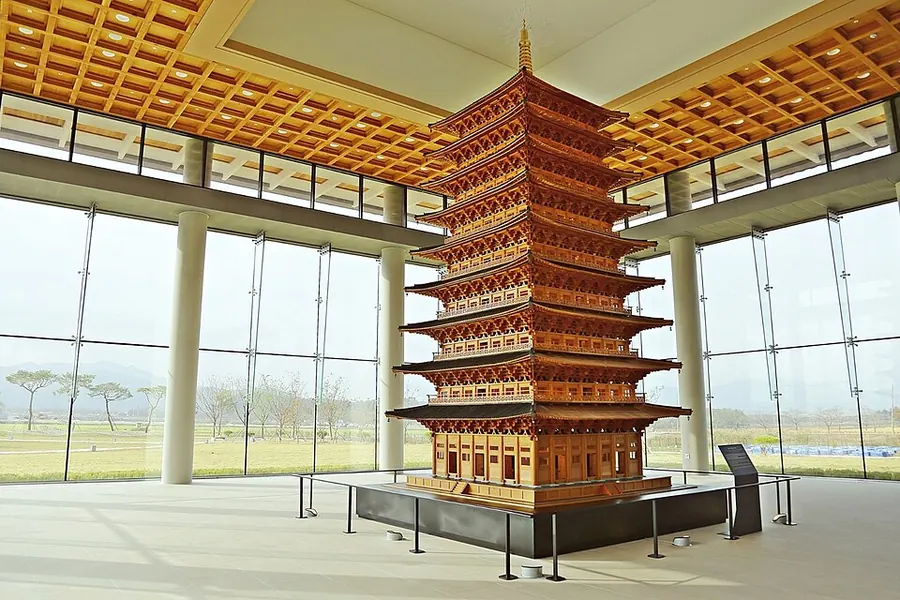
In 645 Silla completed a giant nine-story wooden pagoda, about 80 m high, at Hwangnyongsa Temple.
What happened
When Silla was in trouble from attacks by Baekje and Goguryeo, it built a great wooden pagoda to protect the country with the power of the Buddha. It brought in the skilled Baekje craftsman Abiji and completed the nine-story pagoda in 645. It was about 80 m high, about like a 25-story apartment building today. It burned down when the Mongols invaded in 1238, and only the site remains now.
More detail
Two sources checked
Why it happened
In the mid-7th century, Silla was in great danger. In 642 it lost more than 40 fortresses, including Daeya Fortress, to Baekje, and Goguryeo and Baekje pressed Silla together.
In 643, the monk Jajang, who had returned from studying in Tang, advised Queen Seondeok that if a nine-story pagoda were built at Hwangnyongsa Temple, neighboring countries would come and submit.
What happened
Silla invited Abiji, a famous craftsman from its enemy Baekje, to lead the technical work. Igan Kim Yong-chun (father of Kim Chun-chu) took charge as supervisor and carried out the work leading more than 200 craftsmen.
The pagoda was completed in 645. The Samguk Yusa says that the nine stories carried the meaning of pressing down, one by one, the nine states that troubled Silla (Japan, China, Wuyue, Tamna, Baekje, Malgal and others).
What came of it
Its total height was 225 cheok, about 80 m, similar to a 25-story apartment building today. It was one of the largest wooden buildings in East Asia at the time and became a source of pride for the people of Silla.
It was rebuilt several times after being struck by lightning, but in 1238, when the Mongol army invaded, it burned down together with the whole temple. Today only some 60 foundation stones that supported the pagoda remain on the broad temple site.
Links with other countries
Jajang's study in Tang; the invitation of the Baekje craftsman Abiji.
People in this event
- Seondeok — She brought in Abiji and completed the nine-story wooden pagoda in 645.
- Jajang — He suggested building the nine-story wooden pagoda to protect the country.