 BETA
EventGoryeo Period
The Golden Age of Bisaek Celadon and Inlaid Celadon
1100–1200 (estimated) · Goryeo · Kilns of Gangjin and Buan
Today: Gangjin, South Jeolla Province, and Buan, Jeonbuk Special Self-Governing Province
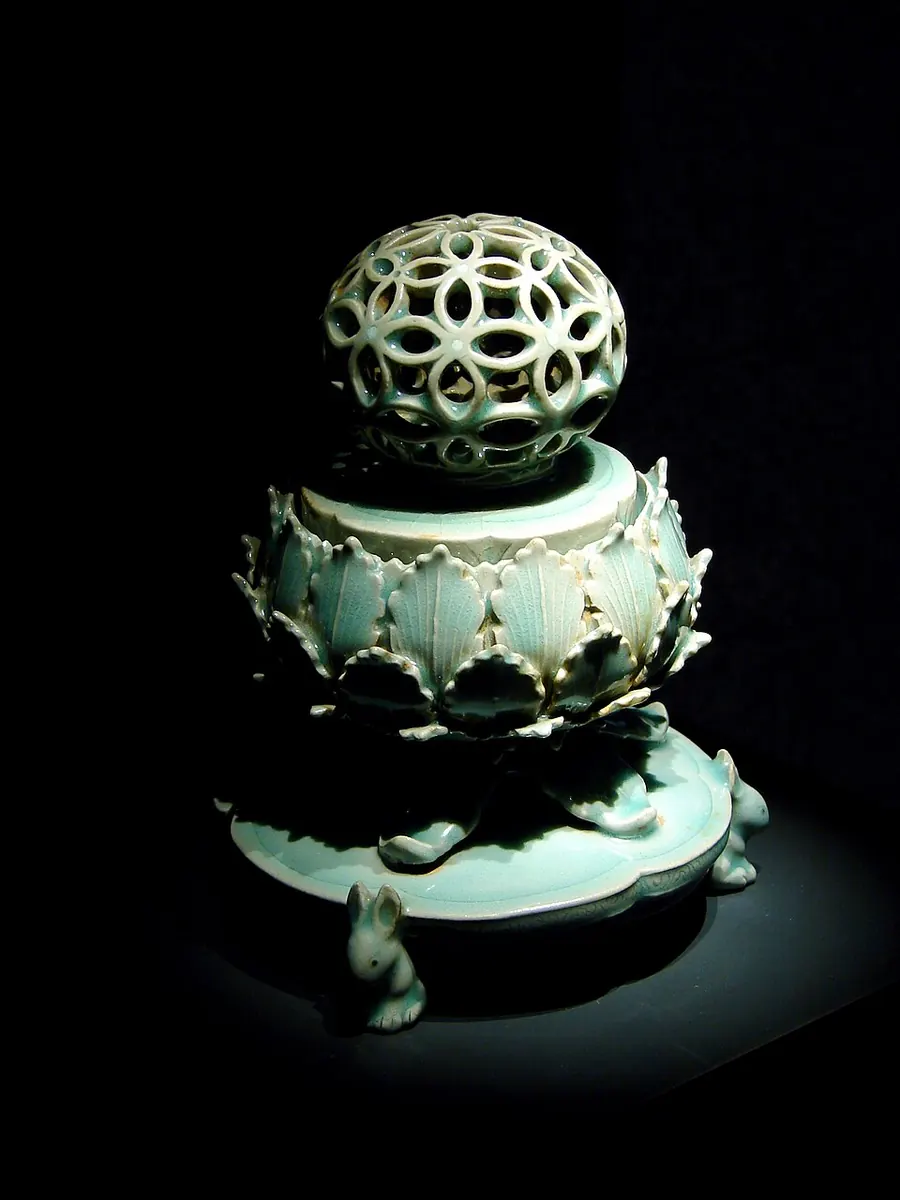
Goryeo took in Chinese celadon technology around the late 9th to 10th century. In the first half of the 12th century it brought to full bloom the clear blue-green celadon called "bisaek" and Goryeo's own inlaid celadon. After the 13th century the quality declined because of Mongol invasions and other troubles, and the craft led on to buncheong ware in early Joseon.
What happened
How do you turn a skill you learned into a vessel that is truly your own? Goryeo learned how to make celadon from China and perfected a clear blue-green celadon called "bisaek." Then it added the inlay technique, carving a pattern and filling it with clay, to create a skill all its own. After the Mongol invasions and other troubles the quality declined, and the craft led on to buncheong ware in early Joseon. It shows that when you add your own way to what you have learned, something new is born.
More detail
Two sources checked
Why it happened
How did people who only learned from others come to make a vessel all their own? Around the late 9th to 10th century, Goryeo took in the way of making celadon from the Yue kilns in Zhejiang, China. At first, it was like a student copying the teacher's skill.
As it happened, Gangjin and Buan in Jeolla Province had good clay, firewood, and sea routes that made it easy to ship goods by boat. So large kiln sites grew up there. With materials and routes both in place, the ground was ready for the learned technique to grow into something Goryeo's own.
What happened
In the first half of the 12th century, the clear blue-green celadon that the people of Goryeo called "bisaek" was perfected. Xu Jing, an envoy from Song China who came to Goryeo in 1123, even wrote words of praise for its color. It was like the moment a student is praised by someone from the teacher's own country.
The Goryeo potters did not stop there. They developed the "inlay" technique: they carved into the surface of a vessel, filled the grooves with white or red clay, and fired it so that white and black patterns appeared. They set in fine designs such as clouds and cranes, willow trees and chrysanthemums. A single piece must have taken a great deal of time and care.
What came of it
Inlaid celadon is regarded as a skill unique to Goryeo, and it is almost never seen in China.
After the 13th century the quality declined because of Mongol invasions and other troubles, and late Goryeo celadon led on to buncheong ware in early Joseon. The kiln sites in Gangjin, South Jeolla, and Buan, North Jeolla, are protected as historic sites.
These blue vessels quietly tell people today that new things are born when you do not stop at copying what you learned but add your own way.