 BETA
EventJoseon Period
Making of the Jagyeongnu
1434 · Joseon · Borugak Pavilion, Gyeongbokgung Palace, Hanyang
Today: Gyeongbokgung Palace, Jongno-gu, Seoul, Korea
The Jagyeongnu, an automatic water clock that strikes a bell and a drum by itself at set times, was made.
What happened
With old water clocks, a person had to watch all night and read the markings. Jang Yeong-sil and others made the Jagyeongnu, a water clock that tells the time by itself. As the water filled up, iron balls rolled and moved wooden figures. Then the figures struck a bell and a drum to announce the hour.
More detail
Two sources checked
Why it happened
Joseon measured time with water clocks and, at night, struck bells and drums to announce when to open and close the city gates. With the old water clocks, however, the attendant on duty had to watch the water level all night and strike the bell by hand. If he dozed or misread it, the time for the whole country went wrong.
Sejong had a clock made that would announce the time by itself, without anyone having to watch it.
What happened
Jang Yeong-sil, Yi Cheon, Kim Jo, and others received the royal order and made an automatic water clock. On the 1st day of the 7th lunar month of 1434, they built a building called Borugak south of Gyeonghoeru Pavilion and began using the clock there for the first time.
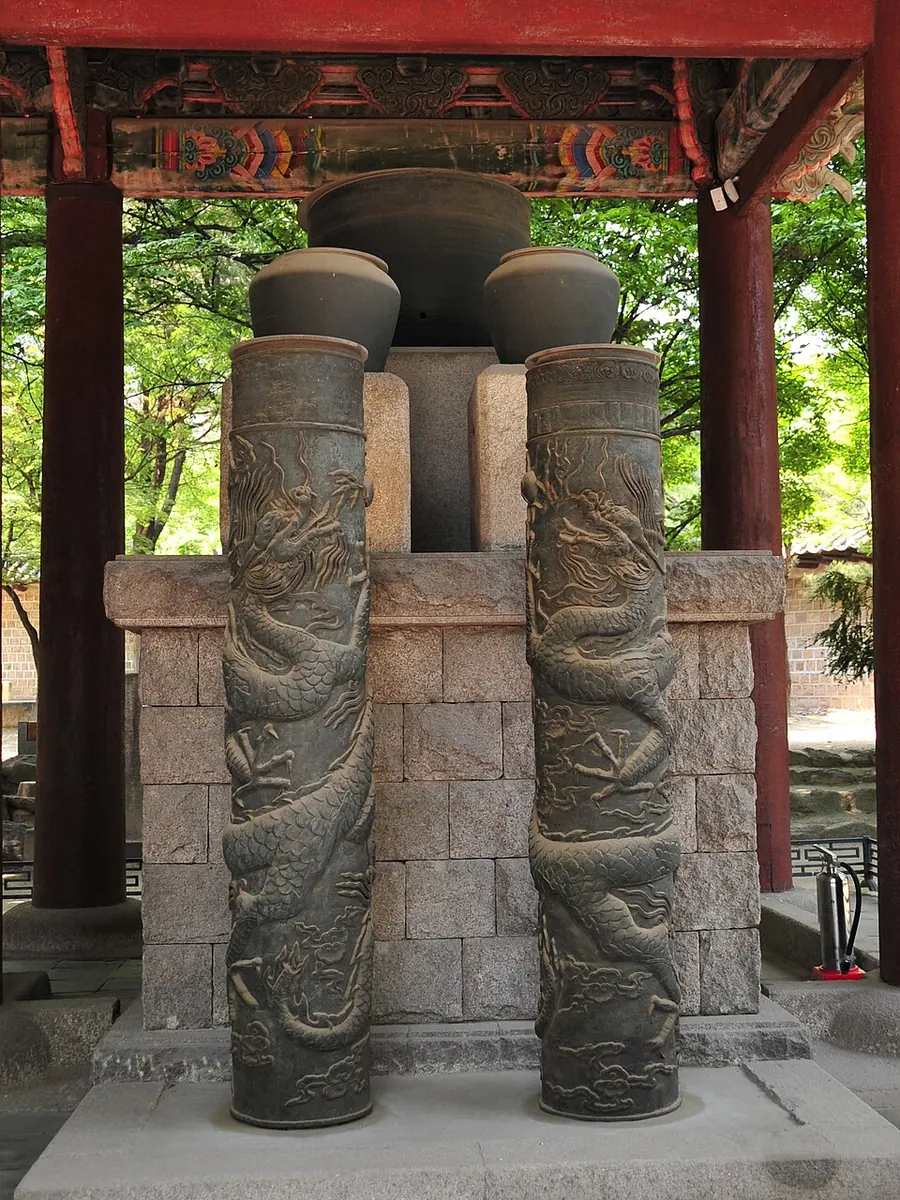
When water flowing down from a large upper jar filled a long tube below, a rod floating on the water rose and dropped iron balls at set times. When the rolling balls touched the mechanism, wooden figures struck a bell, a drum, and a gong, and at each of the twelve hours, figures of the twelve zodiac animals appeared holding plaques that gave the time.
What came of it
The day of the palace and the capital ran according to the time that the Jagyeongnu announced. Around the same time, Sejong also had a sundial (Angbu Ilgu) and instruments for observing the heavens made.
The Jagyeongnu of Sejong's time has not survived. The water jar and water-receiving tube of a Jagyeongnu remade in 1536 (the 31st year of King Jungjong) survive and are designated a National Treasure.
People in this event
- Sejong — He had the Jagyeongnu made and put it in Borugak Pavilion for use.
- Jang Yeong-sil — Together with Yi Cheon, Kim Jo, and others, he made the Jagyeongnu, the automatic water clock.