 BETA
EventGoryeo Period
Printing of the Jikji with Metal Movable Type
1377 · Goryeo · Heungdeok Temple in Cheongju
Today: Heungdeok-gu, Cheongju, North Chungcheong Province (Heungdeok Temple Site and Cheongju Early Printing Museum)
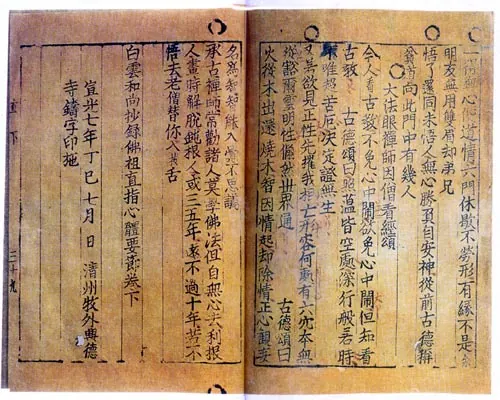
The Jikji, printed in 1377 at Heungdeok Temple in Cheongju, Goryeo, with metal movable type by the disciples of the monk Baegun Gyeonghan, is the oldest metal-type book still in existence. It is now in the National Library of France and became a Memory of the World item in 2001.
What happened
How did the teachings of the monk Baegun become a book? After the master died in 1374, his disciples printed the Jikji with metal type at Heungdeok Temple in Cheongju in 1377 to spread his teachings. Only the second volume survives, but it is the oldest metal-type book, about 70 to 80 years before the Gutenberg Bible, and it became a UNESCO Memory of the World item. It is now in the National Library of France, so Korea and France see the book differently, but the wish to share knowledge widely is still precious today.
More detail
Two sources checked
Why it happened
How did one book written by a monk become a treasure the world pays attention to? Baegun Gyeonghan was a Seon (Zen) monk of late Goryeo. In 1372 (the 21st year of King Gongmin) he picked out the passages most essential to enlightenment from the words of the Buddha and famous monks and gathered them into two volumes. It was a bit like a summary notebook made before an exam, with only the key points from the textbook.
Gyeonghan died in 1374. His disciples wanted to spread the teachings their master left to more people, so they decided to print this book. Printing could reach far more readers than copying out one book at a time by hand.
What happened
In the 7th lunar month of 1377 (the 3rd year of King U), at Heungdeok Temple outside Cheongju, the disciples Seokchan and Dalmam printed the book with metal type. The nun Myodeok paid for it. Everyone joined forces, as if finishing a group assignment. Its formal title is Baegun Hwasang Chorok Buljo Jikji Simche Yojeol.
But there is a sad fact about this book. Only the second volume survives, and it lacks its first page, so 38 pages remain. Even so, there was a twist. In 1985 a piece of an iron bell inscribed "Heungdeok Temple" turned up in Uncheon-dong, Cheongju, and the temple site where the book was printed was confirmed.
What came of it
Why is the Jikji special? Because it is the oldest of the metal-type books that survive today. It is about 70 to 80 years earlier than Gutenberg's 42-line Bible (1450s). In 2001 it became a UNESCO Memory of the World item.
In the late 19th century the French minister to Korea, Victor Collin de Plancy, bought the book, and it is now in the National Library of France. In Korea it is seen as a cultural treasure that should be brought back, while in France it is seen as a collection item bought and donated by proper procedures. The same book is seen through different eyes.
The disciples' wish to share knowledge by printing it carefully, page by page, is much like the wish today to share good materials with a friend.
People in this event
- Gyeonghan, Monk Baegun — He compiled the Jikji, and after his death his disciples printed it with metal movable type.