 BETA
EventThree Kingdoms Period
Building of King Muryeong's Tomb: A Brick Tomb in the Southern Dynasties Style
525 CE · Baekje · Ungjin, Baekje
Today: Tomb of King Muryeong and Royal Tombs (Songsan-ri), Gongju, South Chungcheong
The tomb where King Muryeong of Baekje was buried in 525 is a brick tomb in the style of China's Southern Dynasties, a rare royal tomb of the Three Kingdoms Period whose owner is known for certain.
What happened
King Muryeong of Baekje was buried in 525 in a tomb made of stacked bricks. It follows the shape of tombs in Liang of China, with which Baekje had close ties. It was found by chance in 1971 during water channel work, and it had never been robbed. A stone tablet inside the tomb has the king's name written on it, so it is a rare royal tomb whose owner is certain.
More detail
Two sources checked
Why it happened
King Muryeong (r. 501 to 523) was the king who revived Baekje, which had been shaken by pressure from Goguryeo. He had regained enough confidence to send an envoy to Liang in southern China to announce that 'it has become a strong country again.'
While staying close to Liang, he also took in much of its culture. So he also built his tomb in the brick-tomb style that was popular in Liang.
What happened
King Muryeong died in the fifth month of 523 and was buried in this tomb a little over two years later, in the eighth month of 525. His queen was later buried together in the same tomb.
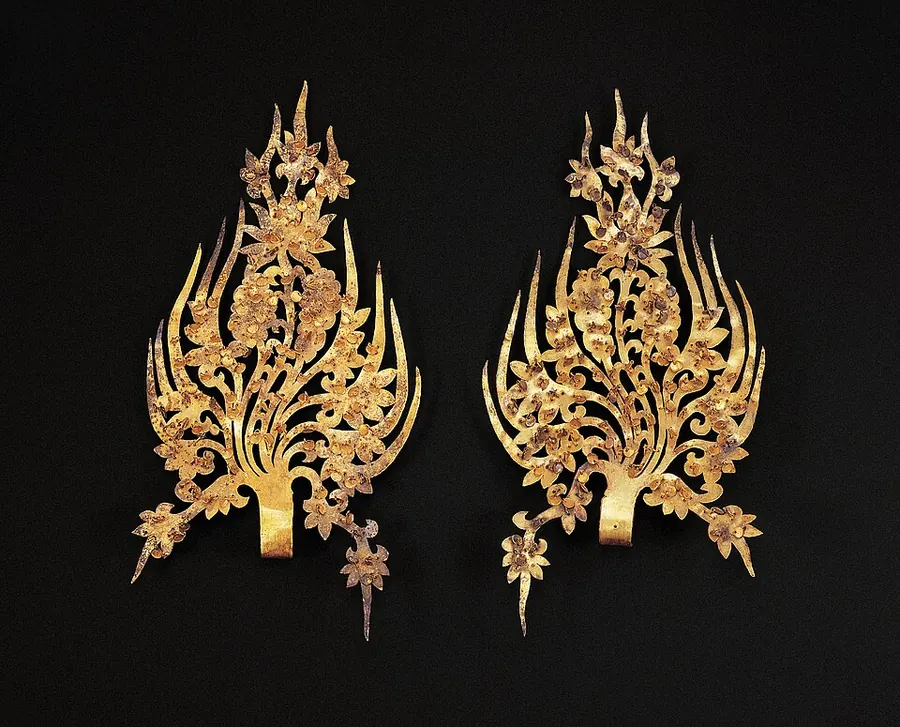
In 1971, while digging a drainage ditch at the Songsan-ri tomb cluster in Gongju to stop water from leaking in, the entrance was found by chance. It had never been looted, and more than 4,600 artifacts came out of the tomb, including gold crown ornaments, gold earrings, and bronze mirrors.
On the memorial stone (jiseok, a stone tablet naming the person buried) placed near the entrance were carved the king's title 'Yeongdong Daejanggun (Great General Who Pacifies the East), King Sama of Baekje' and the date of his death.
What came of it
Among the royal tombs of the Three Kingdoms period, it is almost the only one for which the occupant and the year of burial are known for certain. So it became the standard for dating other Baekje artifacts.
The method of laying bricks followed China, but the gold crown ornaments and accessories show Baekje's own skill. The king's coffin was made of Japanese umbrella pine (geumsong), which grows only in Japan, telling us that Baekje exchanged widely with both China and Wa.
Links with other countries
Diplomatic and cultural exchange with Liang of the Southern Dynasties of China
People in this event
- King Muryeong — He died in 523 and was buried in this brick tomb in 525.