 BETA
EventJoseon Period
Golden Age of Genre Painting (Kim Hong-do, Sin Yun-bok, and Kim Deuk-sin)
1770–1810 (estimated) · Joseon · Hanyang (Dohwaseo, the royal painting office)
Today: Seoul, Korea
Genre paintings (pungsokhwa) by Kim Hong-do, Sin Yun-bok, and others, showing the daily life of ordinary people, became very popular.
What happened
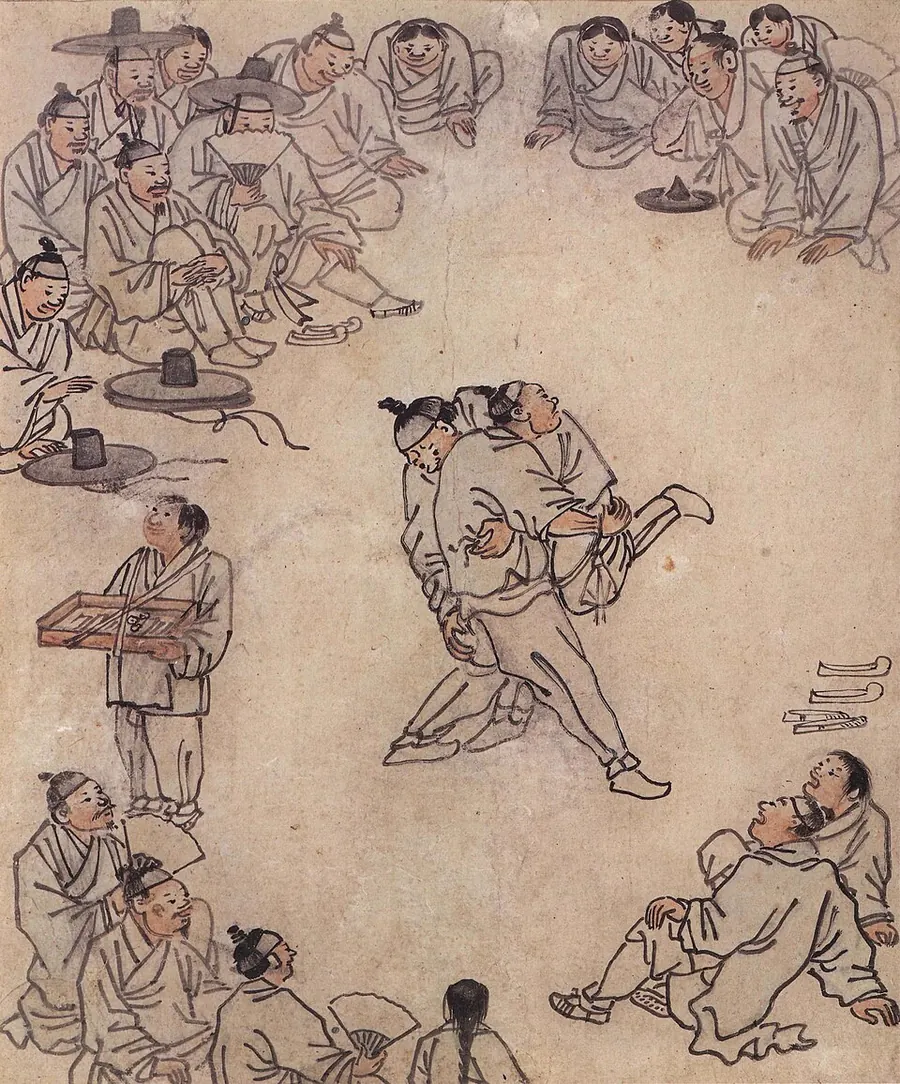
In late Joseon, pungsokhwa, paintings of the lives of ordinary people, became very popular. Kim Hong-do painted a child studying at a seodang (a village school), people wrestling, and a blacksmith's shop. Sin Yun-bok painted yangban (nobles) and women in beautiful colors. From these paintings we can learn about the clothes and games of people at that time.
More detail
Two sources checked
Why it happened
When the two great wars ended and society became stable, people's eyes shifted from imagined scenery to the real world around them. It is the same current that produced jingyeong sansuhwa, paintings of Korea's own landscapes.
As commerce and cities developed, the number of people who bought and enjoyed paintings also grew. Ordinary people at work and at play became subjects of painting.
What happened
In the first half of the eighteenth century, the scholar-painters Yun Du-seo and Jo Yeong-seok opened the door to genre painting (pungsokhwa) by painting everyday scenes such as a woman gathering greens and a person sewing. In the late eighteenth to early nineteenth centuries, Kim Hong-do, a court painter of the Dohwaseo, painted scenes of commoners at work and at play, such as the village school, wrestling, the blacksmith's shop, and the washing place, and 25 of these survive in a single album.
Sin Yun-bok left 30 paintings in the Hyewon Jeonsincheop, depicting yangban, gisaeng (female entertainers), and women, and night scenes of the city, with delicate lines and fine colors. Kim Deuk-sin carried on Kim Hong-do's style and painted rural life with humor.
What came of it
Genre paintings are precious materials that show with our own eyes the clothing of the people of that time, their houses and tools, their work and play, and the relations among social classes.
At the same time, commoner culture such as Hangul novels, pansori, and folk paintings (minhwa) also flourished.
People in this event
- Kim Hong-do — He vividly painted the day of ordinary people, such as the seodang, wrestling, and the blacksmith's shop.
- Sin Yun-bok — He painted yangban and women in beautiful colors.
- Kim Deuk-sin — He carried on Kim Hong-do's style and painted rural life with humor.