 BETA
EventGoryeo Period
Creation of the Tripitaka Koreana (Jaejo Daejanggyeong)
1236–1251 · Goryeo · Daejanggodo office in Ganghwa
Today: Ganghwa County, Incheon Metropolitan City (the blocks are now at Haeinsa in Hapcheon, South Gyeongsang Province)
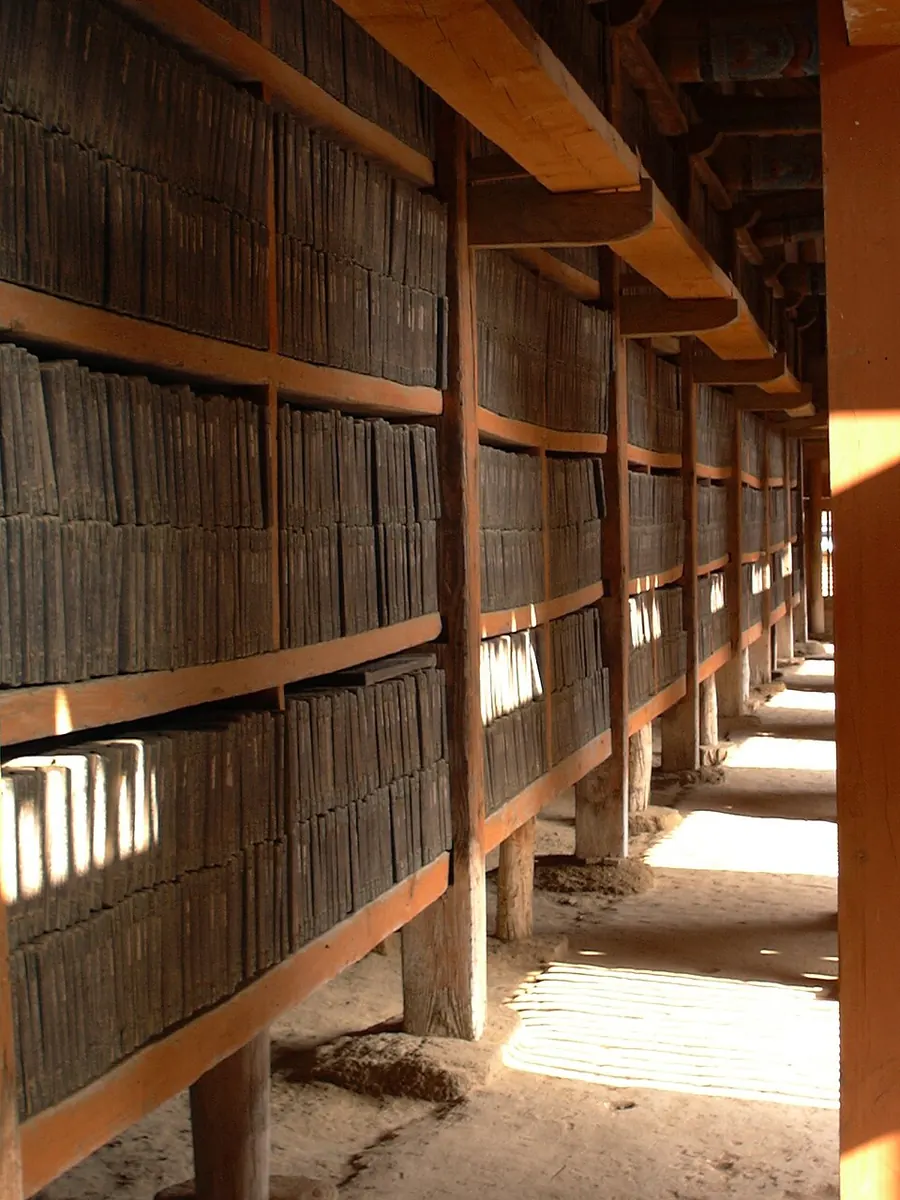
In 1232 the Mongol invasion burned the first set of Tripitaka (Buddhist scripture) woodblocks, so Goryeo, hoping to protect the country with the Buddha's power, carved 81,258 woodblocks again over 16 years, starting in 1236, on Ganghwa Island and elsewhere. Today the blocks remain at Haeinsa Temple and are a UNESCO World Heritage Site and a Memory of the World item.
What happened
Did you know there was a time when people carved wooden blocks instead of using swords to defend their country? When the Mongols invaded and the first Tripitaka (Buddhist scripture) woodblocks burned, Goryeo did not give up. Starting in 1236, it carved 81,258 woodblocks again over 16 years. That is so many that carving one a day would take more than 220 years. Today they remain at Haeinsa Temple as a World Heritage Site, so the care people poured in when they started over from ruins has lasted a very long time.
More detail
Two sources checked
Why it happened
When the country was in danger, what did the people of Goryeo try to protect it with? Surprisingly, one answer was not a sword but wooden blocks. When the Khitan invaded during the reign of King Hyeonjong, Goryeo prayed for the Buddha's power to drive them away and carved its first set of Tripitaka woodblocks (the Chojo Tripitaka). These blocks were kept at Buinsa Temple in Daegu.
But in 1232, during the second Mongol invasion, those blocks burned. Long years of devotion vanished overnight. Today it would be like a big project your group had worked on for months being completely ruined the night before the presentation. It must have been a huge shock.
The Goryeo king and his officials did not sit down in despair. They decided to carve the Tripitaka again and pray for the Mongol army to be driven away. Even when they could not stop the enemy in front of them with swords, they went looking for something that could bring everyone's hearts together.
What happened
That resolve soon became action. In 1236 (the 23rd year of King Gojong), Goryeo set up a temporary office called the Daejang Dogam on Ganghwa Island, and branch offices on Namhae and other places, so the work was done in several places at once. It was like splitting a big project among several groups instead of having just one class do it all.
The job did not finish easily. Carving took 16 years and was completed only in the ninth month of 1251. The blocks are known to number 81,258. Letters were carved on the front and back of each block, and carving one block a day would take more than 220 years.
Even so, the result was astonishing. The letters are even and there are very few mistakes. Although so many people carved by hand over such a long time, the text is said to look as neat as if one person had written it all.
What came of it
These blocks are regarded as the oldest and most accurate set of Chinese-character Tripitaka blocks that survives complete. Japan's twentieth-century Taisho Shinshu Daizokyo was also based on them. Because they were made again, and more carefully, after the first set burned, a more trustworthy record ended up surviving.
The blocks were moved to Haeinsa Temple in Hapcheon in late Goryeo or early Joseon and have been kept there ever since. Haeinsa's Janggyeong Panjeon, the halls that store the blocks, became a UNESCO World Heritage Site in 1995, and the blocks became a Memory of the World item in 2007.
Thanks to people who did not give up in the face of failure and piled their devotion up again, we can still see a record more than 700 years old. It shows how long the strength of starting over from ruins can last.
People in this event
- Yi Gyu-bo — He wrote a prayer asking that the country be protected while the Tripitaka was carved.
- Choe U — He held real power in Goryeo while the Tripitaka was carved on Ganghwa Island.