 BETA
PersonLegend
Dangun Wanggeom
active 2333 BCE · Founding ancestor who founded Gojoseon · Gojoseon
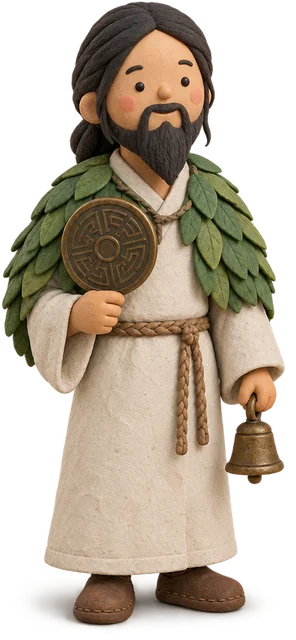
Dangun is said to have founded Gojoseon and is regarded as the ancestor of the Korean people. The Samguk Yusa and other books tell that he was the son of Hwanung, who came down from heaven, and Ungnyeo, a bear who became a woman. Today Korea remembers him on Gaecheonjeol (National Foundation Day), which honors the day the country first opened.
Who appears in the very first story of Korea? According to the old tale, Dangun Wanggeom, the son of Hwanung from heaven and Ungnyeo, who had been a bear, founded Gojoseon with Asadal as its center. He is thought to have handled both offering sacrifices to heaven and ruling the country. We cannot know whether he was a real person, but because people kept passing this story on, Korea still marks the start of the nation on Gaecheonjeol today.
This comes from a legend. The story has been passed down from long ago, so we cannot know whether it really happened.
More detail
Two sources checked
Why do both the sky and a bear appear in Korea's very first story? According to the Samguk Yusa, Hwanung, the son of Hwanin, ruler of heaven, led a band of 3,000 followers down to the Divine Altar Tree (Sindansu) on top of Taebaek Mountain. Hwanung brought officials in charge of wind, rain and clouds, and is said to have looked after more than 360 matters of human life, such as grain, life, illness, punishment, and good and evil.
Here the story takes an unexpected turn. The child born to Hwanung and Ungnyeo, a bear who became a woman, was Dangun Wanggeom. He made Pyongyang Fortress his capital and named the country 'Joseon,' and later moved the capital to Asadal. After ruling for 1,500 years he became a mountain god, and the story adds that he was 1,908 years old at that time. Of course that is hard to believe as a human age, so it can be read as the tale's way of describing a country that lasted a very long time.
The names hold hints too. 'Dangun' is explained as a person who holds ceremonies to heaven, and 'Wanggeom' as the chief who leads the country. Today it would be like the class president and the person in charge of events being the same person. That is why Dangun Wanggeom is thought to show a ruler who handled both ritual and government.
Some also read the story as meaning that a people who believed they came from heaven and a people who worshipped the bear joined together to form a country. You could see it as a story of different teams becoming one team. Still, Dangun is a figure from tradition, so we cannot confirm whether he really existed or when he was active.
The Dangun story first appears in detail in the Samguk Yusa and the Jewang Ungi (Rhymed Records of Emperors and Kings), both written in late Goryeo. Under King Sejong of Joseon, a shrine was built in Pyongyang to honor Dangun, and today Gaecheonjeol, which honors the day the country first opened, is a national holiday. The feeling that kept this old story alive has become a power that lets Koreans feel they share the same roots.