 BETA
Person
Gwon Yul
1537–1599 · Supreme commander during the Imjin War · Joseon
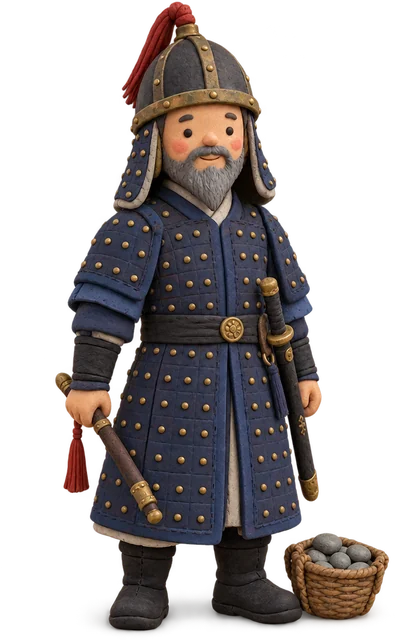
He was a general who beat 30,000 Japanese troops at Haengju Fortress during the Imjin War.
Gwon Yul was a general who was active in the Imjin War. In 1593 at Haengju Fortress, with a few thousand soldiers, he beat 30,000 Japanese troops. This battle is called the Great Victory at Haengju, and it is remembered as a great victory of the Imjin War.
More detail
Two sources checked
Gwon Yul was born in 1537 as a son of Chief State Councillor Gwon Cheol. He was a civil official who passed the civil examination only at the late age of 46, in 1582. His daughter later married the famous chief minister Yi Hang-bok.
When the Imjin War broke out in 1592, he was magistrate of Gwangju in Jeolla Province. When the Jeolla army that had gone north to retake Seoul was badly defeated at Yongin, he led the remaining troops back and gathered strength again. Then at Ichi in Geumsan, together with Hwang Jin, he stopped the Japanese army that was trying to enter Jeonju and protected Jeolla Province. For this service he became governor of Jeolla Province.
In the winter of that year he went north again with more than 10,000 men and took up position at Doksan Fortress in Suwon. Even when the Japanese army tried to lure him out, he held the fortress firmly and waited for his chance, and he struck the retreating enemy with cavalry. After that he moved his troops to Haengju Fortress near Seoul and built his position by surrounding it with wooden palisades.
In February 1593, a Japanese army of 30,000 divided into seven groups attacked Haengju Fortress in turn. The troops in the fortress numbered only a few thousand, even counting the 1,000 monk soldiers led by Cheo Yeong, but they held out to the end and drove the enemy back. For this Haengju Victory he became dowonsu, commander of the whole army, and he led the army during the Jeongyu War as well. He retired due to illness in 1599 and died in July of that year.
Life timeline
- 1582Passes the civil examination
He was a late 46 years old. - 1592Wins the Battle of Ichi
He stopped the Japanese army at Ichi in Geumsan and protected Jeolla Province. - 1593Becomes dowonsu