 BETA
Person
Han Yong-un
1879–1944 · Monk-poet · Japanese Government-General of Korea
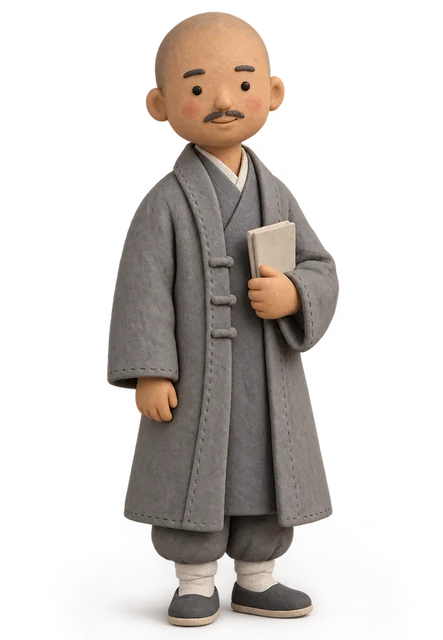
He was a monk-poet and independence activist who wrote Nim-ui Chimmuk (The Silence of the Beloved).
He was a monk and independence activist who wrote the poem Nim-ui Chimmuk (The Silence of the Beloved). He was one of the 33 national representatives at the time of the March 1st Movement. Because of this he was put in prison. He never bent to Japan to the end.
More detail
Two sources checked
Han Yong-un was born in Hongseong, South Chungcheong Province, in 1879. His Buddhist name was Yong-un and his pen name was Manhae. He left home when young and entered a temple on Seoraksan, and in 1905 he formally became a monk at Baekdamsa Temple.
Believing that Buddhism too had to be renewed to suit the times, he wrote Joseon Bulgyo Yusinron (On the Reform of Korean Buddhism) in 1910 and argued for reforming Buddhism. He also worked hard at translating difficult Buddhist scriptures written in classical Chinese into the Korean language.
During the March First Movement of 1919, he signed as the Buddhist representative among the 33 National Representatives. He was arrested and spent three years in prison, and even in prison he did not give up his aim of independence.
In 1926 he published the poetry collection Nim-ui Chimmuk (The Silence of the Beloved). It is said that within its songs of longing for a departed 'beloved' lies his feeling for the lost country. In 1927 he took the lead in founding Singanhoe, a national movement organization.
In his later years he lived at Simujang, a small house in Seongbuk-dong, Seoul, and never bowed to the Japanese colonial rulers to the very end. He died there on 29 June 1944.
Life timeline
- 1905Became a monk at Baekdamsa Temple
- 1910Wrote Joseon Bulgyo Yusinron (On the Reform of Korean Buddhism)
- 1926Published the poetry collection Nim-ui Chimmuk (The Silence of the Beloved)
Related events
- 1919March 1st Movement
- 1926Publication of Han Yong-un's Poetry Collection Nim-ui Chimmuk
- 1927Founding of the Singanhoe