 BETA
Person
Heo Nanseolheon
1563–1589 · Woman poet of Joseon · Joseon
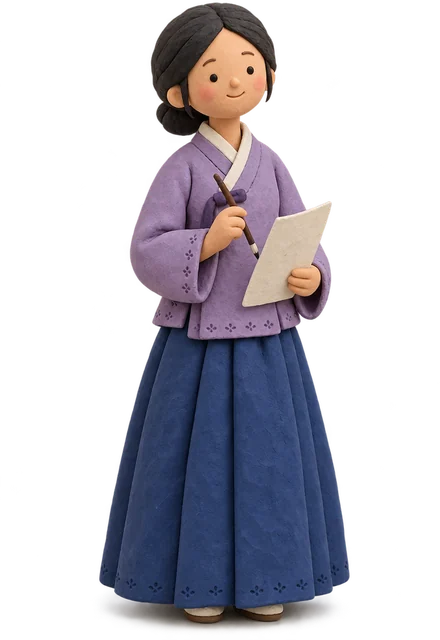
She was a woman poet of mid-Joseon who made her name even in China and Japan despite a short life.
Heo Nanseolheon was a poet born in Gangneung. From a young age she wrote poems very well. She died at the age of twenty-seven, but her younger brother Heo Gyun gathered her remaining poems and put them together as a book. This collection was also published in China and Japan and widely read.
More detail
Two sources checked
Heo Nanseolheon's original name was Cho-hui, and Nanseolheon was the pen name she used. She was born in 1563 in Gangneung, into a family in which her father Heo Yeop, her brothers Heo Seong and Heo Bong, and her younger brother Heo Gyun were all famous for their writing. Later people grouped these five together and called them "the five writers of the Heo family."
At the age of eight she wrote a piece called "Gwanghanjeon Baengnungnu Sangnyangmun," imagining a new pavilion being raised in a palace in heaven, and was called a prodigy. Her elder brother Heo Bong, cherishing his sister's talent, had her study hansi (poetry written in Chinese characters) with the poet Yi Dal. In that age, it was very rare for a woman of a yangban family to leave behind both her name and her poems.
Around the age of fifteen she married Kim Seong-rip, but she did not get along with her husband or her mother-in-law. She lost her son and daughter to epidemic disease and also lost the child in her womb. When even her elder brother Heo Bong, on whom she relied most, died away from home at a young age, she herself ended her life the following year, 1589, at the age of 27.
She left word that all her writings should be burned. But her younger brother Heo Gyun collected the poems that remained in her family home and the poems he had memorized, and compiled a manuscript the following year. This manuscript was passed to the Ming envoy Zhu Zhifan and came out as a book in China, and the Nanseolheon Jip was published in Joseon in 1608 and in Japan in 1711.
The poems that survive number more than 210, and more than half of them depict the world where immortals live. They are interpreted as expressing a wish to escape a painful reality.