 BETA
Person
Injo
1595–1649 · 16th king of Joseon · Joseon
Birth name: Yi Jong (李倧)
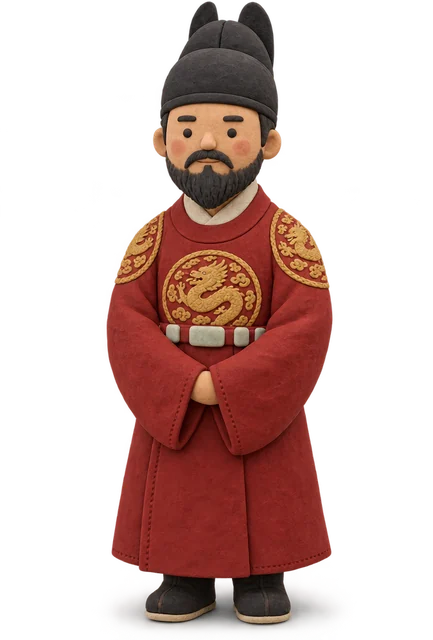
The 16th king of Joseon, who went through the Jeongmyo and Byeongja Wars.
Injo drove out Gwanghaegun and became king. He kept close to the Ming and kept away from Later Jin in the north. After that, he went through two big wars, in 1627 and 1636. He held out at Namhansanseong Fortress and surrendered to Qing in 1637.
More detail
Two sources checked
Injo was a grandson of King Seonjo, born in 1595 in Haeju, Hwanghae Province. In 1623, together with Westerners such as Kim Ryu and Yi Gwi, he carried out the Injo Restoration, which drove out Gwanghaegun, and became king.
The next year, 1624, Yi Gwal, who had made a great contribution to the restoration but remained only a second-class meritorious retainer, rose in rebellion. When the rebel army entered Seoul, Injo fled to Gongju, and the rebellion was put down in about a month.
The Injo government drew close to Ming and kept its distance from Later Jin. When Later Jin invaded in 1627 (the First Manchu Invasion), Injo took refuge on Ganghwa Island and then ended the war by making a peace agreement. In 1636 Later Jin, which had changed its name to Qing, demanded a relationship of king and subject, and when Joseon refused, it invaded again (the Second Manchu Invasion).
With the road to Ganghwa Island blocked, Injo went into Namhansanseong Fortress and held out. But on hearing that Ganghwa Island had fallen, on the 30th day of the first lunar month of 1637 he left the fortress and surrendered to the Qing emperor at Samjeondo. Crown Prince Sohyeon, Grand Prince Bongnim and the ministers who had urged fighting to the end were taken to Shenyang in Qing.
Within the country he extended the Daedongbeop to Gangwon Province and made the Yeongjeongbeop, which set a low fixed tax regardless of the grade of the land. He also rebuilt Namhansanseong Fortress and set up military units such as the Suocheong and the Chongyungcheong. When Crown Prince Sohyeon, who had returned from Qing in 1645, suddenly died, he made his second son, Grand Prince Bongnim, crown prince, and Injo died in 1649.
Life timeline
- 1623Became king through the Injo Restoration
- 1624Yi Gwal's Rebellion
The rebel army took Seoul and he fled to Gongju. - 1627First Manchu Invasion
Later Jin invaded and he took refuge on Ganghwa Island. - 1637Surrendered at Samjeondo
He left Namhansanseong Fortress and surrendered to the Qing emperor. - 1645Crown Prince Sohyeon died
He died soon after returning from Qing, and Grand Prince Bongnim was made crown prince.
Related events
- 1623Injo Restoration
- 1624Yi Gwal's Rebellion
- 1627Later Jin's Invasion of Joseon (Jeongmyo Horan)
- 1627First Manchu Invasion of 1627 (Jeongmyo Horan)
- 1636Proclamation of Qing and the Second Manchu Invasion of Joseon (Byeongja Horan)
- 1636Manchu Invasion of 1636 (Byeongja Horan)
- 1646The Gang Bin Case (Death of Crown Princess Gang, Wife of Crown Prince Sohyeon)