 BETA
Person
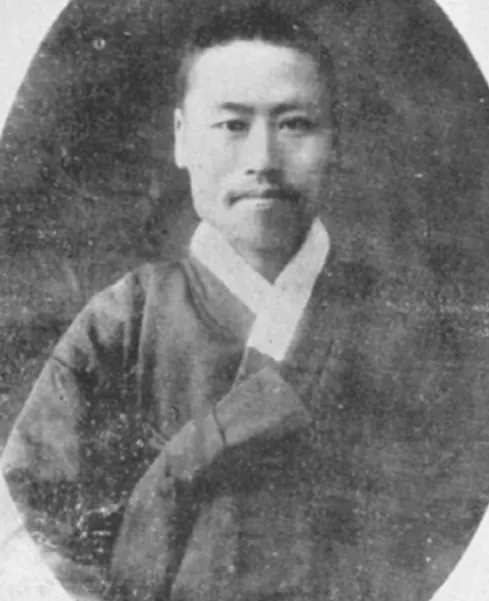
Ju Si-gyeong
1876–1914 · Korean-language scholar · Korean Empire

He was a Korean-language scholar who studied and taught the Korean language and Hangul and laid the base for Hangul spelling.
He was a scholar who studied the Korean language and Hangul. He went busily from school to school carrying a bag (bundle) to teach, so he was called 'Ju Bottari' (Ju the Bundle). Thanks to his research and his students, Hangul spelling rules were later made.
More detail
Two sources checked
Ju Si-gyeong was born in Bongsan, Hwanghae Province, in 1876. While studying classical Chinese as a boy, he came to believe that the Korean script, which anyone can learn easily, mattered more than difficult Chinese characters. He also studied the new learning at Paichai School.
In 1896 he worked at the Independence Newspaper (Dongnip Sinmun), founded by Seo Jae-pil, and helped produce a newspaper written entirely in Hangul. To solve the problem of people writing the same word in different ways, he organized a group called the Gungmun Dongsikhoe and studied spelling.
In 1907 he became a member of the Gungmun Yeonguso (the National Language Research Institute) set up by the government, and he published Gugeo Munbeop (Korean Grammar) in 1910 and Mal-ui Sori (The Sounds of Language) in 1914. His research, which identified the smallest units that make up speech sounds and words, is still highly regarded today.
Even after the country was lost, he went from school to school teaching the Korean language, and on Sundays he trained students at the Joseoneo Gangseupwon (Korean Language Institute). Because he hurried about with a bundle of books under his arm, he got the nickname 'Ju Bottari' (Ju the Bundle). He died young, in 1914, and his students carried on his aim and put the rules of Hangul spelling in order.
Life timeline
- 1910Published Gugeo Munbeop (Korean Grammar)
- 1914Published Mal-ui Sori (The Sounds of Language)