 BETA
Person
Sejo
1417–1468 · Seventh king of Joseon · Joseon
Birth name: Yi Yu
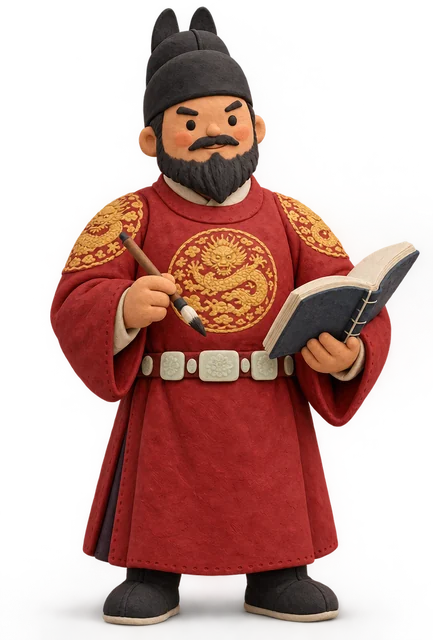
He was the seventh king of Joseon, who took his nephew's throne but strongly built up the country's systems.
Sejo was Prince Suyang, the second son of Sejong. He took the throne from his nephew Danjong and became king. He increased the king's power and began making the Gyeongguk Daejeon (the Great Code of Administration), a book that collected the basic laws of the country.
More detail
Two sources checked
Sejo was the second son of Sejong, born in 1417. He was called Grand Prince Suyang and excelled in both scholarship and martial arts. Under his father he was given the tasks of translating Buddhist scriptures into Korean and organizing music scores.
When his elder brother Munjong died early and his twelve-year-old nephew Danjong became king, in 1453 he, together with Han Myeong-hoe, Gwon Ram, and others, eliminated ministers such as Kim Jong-seo and seized power (the Gyeyu Jeongnan). In 1455 he received the throne from Danjong.
In 1456, when Seong Sam-mun and others were discovered trying to restore Danjong, he executed the officials involved and also abolished the Jiphyeonjeon, where they had worked. The following year Danjong too was exiled to Yeongwol and put to death.
To strengthen royal power, he had the six boards report directly to the king without passing through the Uijeongbu. He enforced the hopae system again to count the population, and in 1466 he changed the land given to officials to the Jikjeonbeop, under which land was given only to officials currently in office. He also began work on the state's basic code, the Gyeongguk Daejeon, publishing first the section on state finances (Hojeon) in 1460 and the section on punishments (Hyeongjeon) in 1461.
In 1467 Yi Si-ae raised a rebellion in Hamgil Province (present-day Hamgyeong Province), but it was put down. In 1468, as his illness grew serious, he passed the throne to his son Yejong and died the next day. He is credited with strengthening the state's institutions, but he is also criticized for seizing his nephew's throne and putting his own will ahead of his officials' words.
Life timeline
- 1453Takes power in the Gyeyu Jeongnan
He eliminated officials who supported Danjong, such as Kim Jong-seo. - 1455Takes the throne
- 1456Abolishes the Jiphyeonjeon
When the plan to restore Danjong was discovered, he executed the officials involved and abolished the Jiphyeonjeon. - 1466Enforces the Jikjeonbeop
Land given to officials was to be given only to officials currently in office. - 1467Puts down Yi Si-ae's rebellion
- 1468Passes the throne to Yejong
He died the day after handing over the throne.
Related events
- 1447Seokbo Sangjeol and Worin Cheongang Jigok
- 1453Gyeyu Coup
- 1456The Six Martyred Ministers' Movement to Restore Danjong
- 1460Completion and Promulgation of the Gyeongguk Daejeon
- 1466Introduction of the Jikjeonbeop
- 1467Yi Si-ae's Rebellion
- 1485Completion of the Dongguk Tonggam