 BETA
Person
Seol Chong
active 681–719 CE · A Confucian scholar of Silla · Unified Silla
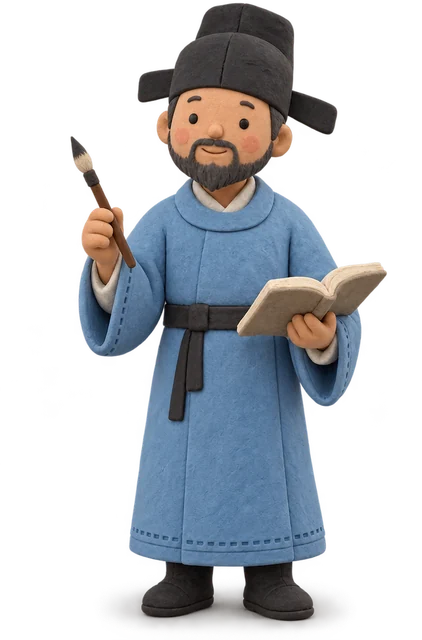
A scholar who organized idu, a way of writing the Korean language with Chinese characters.
Seol Chong was the son of Wonhyo and a scholar of Silla. He organized 'idu,' a way of writing the Korean language by borrowing the sounds and meanings of Chinese characters. Thanks to this, Confucian books could be read in Korean. With his tale of a kingdom of flowers, Hwawang-gye, he advised the king to rule rightly.
More detail
Two sources checked
Seol Chong was born to the great Silla monk Wonhyo and Princess Yoseok. The year of his birth is not certain, but it is thought to be during the reign of King Taejong Muyeol. He was gifted from childhood and mastered the Confucian classics and history books, and his official career rose to Hallim, a post in charge of writing.
Seol Chong's greatest achievement was organizing ways of reading Chinese-character classics by explaining them in Korean. At that time there was no Hangul, so the Korean language was written by borrowing the sounds and meanings of Chinese characters, and this method is called 'idu.' Idu had been used since before Seol Chong, but because he gathered and organized it and taught the classics by glossing them in Korean, the study of Confucianism became much easier and faster. For that reason he was for a time mistakenly known as 'the person who made idu.'
Seol Chong told King Sinmun a story called 'Hwawanggye.' In it, a finely dressed rose and a plain pasque flower come to the king of flowers, and the story asks whom the king should keep at his side. It was advice to keep close those who speak straight words rather than those who speak sweet ones.
In 719 he wrote a text recording the origin of the making of the Amitabha Buddha statue of Gamsansa Temple. He wrote many other works, but almost none remain now.
Seol Chong is counted, together with Gang Su and Choe Chi-won, as one of the three great writers of Silla. In 1022, in the Goryeo period, he was given the title 'Hongyuhu' and was enshrined in the Munmyo, the shrine to Confucius. Seoaksowon Academy in Gyeongju also honors him.
Life timeline
- 719 CEWrote a text on the origin of the Gamsansa Amitabha statue
- 1022Received the title Hongyuhu in Goryeo