 BETA
Person
Song Si-yeol
1607–1689 · A scholar of Joseon · Joseon
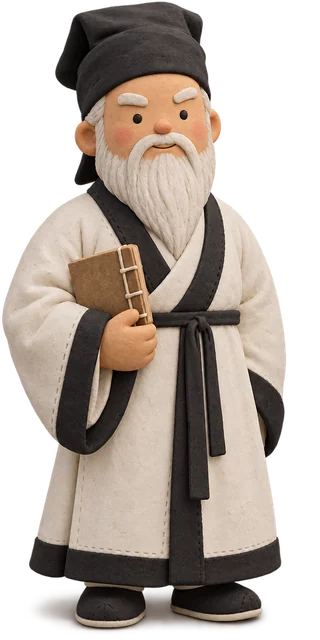
A great scholar who led the Westerners (Noron) in late Joseon.
Song Si-yeol was a great scholar and politician of late Joseon. In King Hyojong's time he argued for the northern expedition to attack Qing. For a long time he led one group of officials and held great power. In 1689, when King Sukjong gave power to another group, he was punished and died.
More detail
Two sources checked
Song Si-yeol's pen name was Uam. Born in 1607 in Okcheon, Chungcheong Province, he studied Neo-Confucianism under Kim Jang-saeng and his son Kim Jip, and in 1636 he became teacher of Grand Prince Bongnim (later King Hyojong), King Injo's second son. After the Second Manchu Invasion he went down to his hometown and devoted himself to study.
When King Hyojong took the throne in 1649, he came to court and submitted the writing 'Gichuk Bongsa,' which carried the view that the humiliation suffered at the hands of Qing had to be avenged. In 1658 he became Minister of Personnel and discussed the Northern Expedition (a plan to go and attack Qing) alone with King Hyojong, but the next year King Hyojong suddenly died.
Under King Hyeonjong, two great disputes (yesong) arose over how long an elder of the royal household should wear mourning dress. In the first dispute in 1659, his argument that only one year of mourning was needed was accepted, but in the second dispute in 1674, the Southerners' argument was adopted. When King Sukjong took the throne, he lost his office and lived in exile for five years from 1675.
When the Westerners regained strength in 1680, he returned, and after the Westerners split into the Noron and the Soron he became the head of the Noron. In 1689 he opposed hurriedly naming the baby born to Royal Consort Hui-bin Jang as the king's successor and incurred King Sukjong's anger. He was exiled to Jeju Island and, on the way to Seoul, received poison at Jeongeup.
His writings were compiled as the Songja Daejeon. After his death his honor was restored and in 1756 he was enshrined in the Munmyo (the shrine to Confucius and famous scholars). However, because he stood sharply against rival factions, assessments of him differ.
Life timeline
- 1633Took first place in the saengwon examination
- 1636Became teacher of Grand Prince Bongnim
He taught King Injo's second son, who later became King Hyojong. - 1649Submitted the Gichuk Bongsa
He offered King Hyojong a writing carrying the intention of taking revenge on Qing. - 1658Became Minister of Personnel
He met King Hyojong alone and discussed the Northern Expedition plan. - 1659Gihae Yesong
He led the Westerners' argument that Queen Dowager Jaui should wear mourning for one year. - 1674Gabin Yesong
He was beaten by the Southerners on the question of the mourning dress for King Hyojong's queen. - 1675Sent into exile
After King Sukjong took the throne he lost his office and lived in exile for five years. - 1680Released through the Gyeongsin Hwanguk