 BETA
Person
Wonhyo
617 CE–686 CE · Monk of Silla · Silla
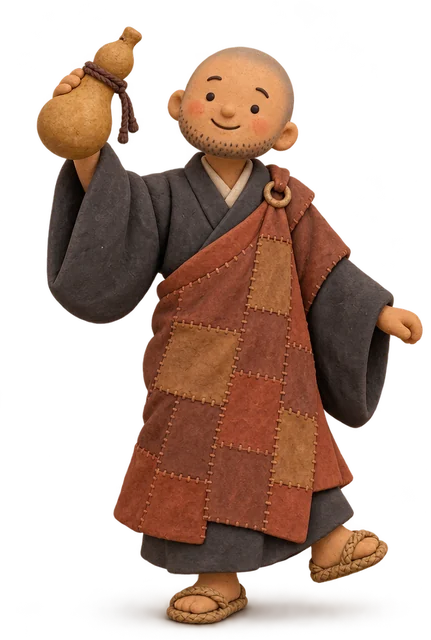
A monk who turned difficult Buddhism into songs for the people
Wonhyo was a monk of Silla. On his way to study in Tang China, he realized that 'everything depends on the mind' and came back. He sang and danced in the streets and taught Buddhism even to common people who could not read. His son Seol Chong is also a famous scholar.
More detail
Two sources checked
Wonhyo was a Silla monk and Buddhist thinker, born in 617 in Apnyang-gun (present-day Gyeongsan, North Gyeongsang). His childhood name was Seodang, and his family name was Seol. In 650, at the age of 34, he tried to go with Uisang to study in Tang, but the first attempt failed. On his second journey, he had a great realization, gave up studying abroad, and returned to Gyeongju.
Afterward Wonhyo formed a bond with Princess Yoseok and had a son, Seol Chong. Since this broke the rules for monks, he took off his monk's robes himself and lived as an ordinary man (geosa). Instead, he wandered through many villages and taught people in hard circumstances, such as poor farmers, slaves, and meat sellers, that they could reach the Pure Land simply by reciting "Namu Amitabul." To spread Buddhism he also composed a song called "Muaega." "Muae" means unhindered by anything.
Wonhyo also devoted himself to study and writing, writing more than 70 kinds of works, over 150 volumes. The Daeseung Gisillon So was widely read in China and Japan, where it was called "Haedongso." The idea of bringing differing Buddhist claims together into one rather than quarreling over them is called "hwajaeng."
Wonhyo died in 686 at the age of 70. In the Goryeo period the title "Hwajaeng Guksa" was added to his name, and even now he is counted as a thinker who represents Korean history.
Life timeline
- 650 CETries to study in Tang with Uisang
The first attempt, by land, failed. - 661 CEHelps Kim Yu-sin's expedition against Goguryeo