 BETA
Person
Yeonsangun
1476–1506 · Tenth king of Joseon · Joseon
Birth name: Yi Yung
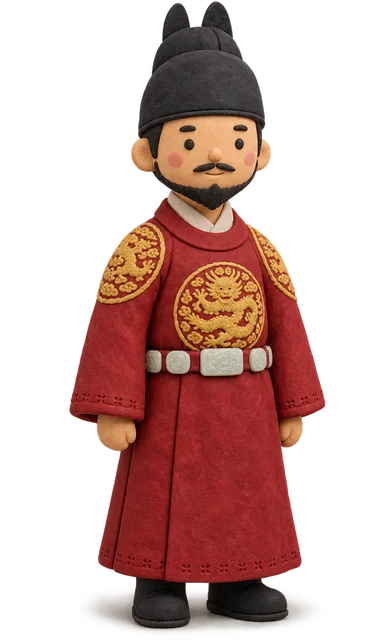
He was the tenth king of Joseon, who caused two purges of scholars (sahwa) and was driven out.
Yeonsangun was the eldest son of Seongjong and the tenth ruler of Joseon. In 1498 and 1504, in two separate purges, he killed or sent away many officials. He also got rid of the offices that spoke honest words to the king. In 1506 he was driven out by his officials, and so he is called 'gun' (prince) instead of 'wang' (king).
More detail
Two sources checked
Yeonsangun was the eldest son of Seongjong. He became crown prince in 1483 at the age of seven, and when Seongjong died in 1494 he became Joseon's 10th king. His mother, Lady Yun, was driven from the position of queen when he was young and died after being given poison, and Yeonsangun learned this only after he became king.
Yeonsangun greatly disliked the officials of the Samsa (Saheonbu, Saganwon, and Hongmungwan), the offices that criticized the king's faults. In 1498 he began the Muo Literati Purge, claiming that the draft historical record (sacho) that Kim Il-son had written contained writings criticizing Sejo, and he punished 52 people. Even his late teacher Kim Jong-jik was punished.
In 1504 he punished all at once the people involved in his mother's expulsion and death, and officials he thought had looked down on him. This was the Gapja Literati Purge. More than 230 people were punished, and more than half of them lost their lives.
After that he abolished even the Saganwon, which spoke frankly, and the gyeongyeon, the sessions in which the king studied with his officials, and he tore down people's houses saying he was making a hunting ground. Female entertainers chosen and brought to feasts were called "heungcheong," and the word "heungcheong mangcheong," meaning spending money wildly, is said to have come from this.
In 1506 the officials drove him out in the Jungjong Restoration in a single night. Yeonsangun was sent to Gyodong on Ganghwa Island and died of illness within two months that same year. Because he was a king who was driven out, he is called "gun" (prince) instead of "wang" (king), and the record of his reign was left under the name "ilgi" (diary) rather than "sillok" (annals).
Life timeline
- 1483Becomes crown prince
- 1494Takes the throne
- 1495Learns of his mother's death
Soon after becoming king he learned that his mother, the deposed Lady Yun, had died after being given poison. - 1504Starts the Gapja Literati Purge
He punished the people involved in his mother's death and more than 230 officials he saw as having opposed him. - 1506Driven out in the Jungjong Restoration
He was sent to Gyodong on Ganghwa Island and died of illness that year.