 BETA
Person
Yi Hwang
1501–1570 · Neo-Confucian scholar of Joseon · Joseon
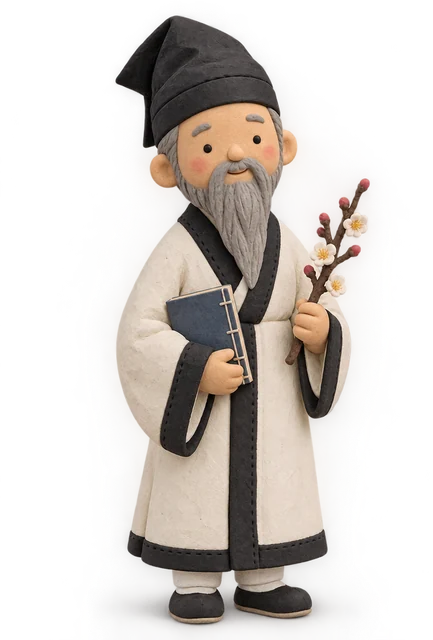
Yi Hwang, born in Yean in 1501, was the scholar Toegye, who turned down government posts and trained students at Dosan Seodang, and led Joseon Neo-Confucianism through the Four-Seven Debate and the Seonghak Sipdo.
What did the man who turned down government posts more than twenty times choose instead? Yi Hwang, also called Toegye, was a great scholar of Joseon who built Dosan Seodang in his hometown and trained students. He debated for years by letter with the much younger Gi Dae-seung and kept improving his own ideas, and for the young King Seonjo he summed up the heart of learning in ten pictures. From him we can learn to listen to different ideas no matter a person's age.
More detail
Two sources checked
If there was a man who turned down government posts more than twenty times, what did he want instead? Yi Hwang was born in 1501 in Yean, Gyeongsang Province (today's Andong). He lost his father when he was only seven months old and was raised by his mother. In 1534 he passed the civil service exam and became an official, but as purges (sahwa) in which scholars were harmed kept coming, he turned his mind to learning rather than office. He renamed a stream in his hometown 'Toegye' and took it as his pen name.
In 1548 he became magistrate of Punggi, and he asked the government to have the king grant a name plaque and books to Baegundong Seowon, an academy built by Ju Se-bung. The request was accepted, and Baegundong Seowon became Sosu Seowon, the first academy to be given a name by the king (a sao seowon).
Staying in his hometown and turning down office more than twenty times, he built Dosan Seodang and trained students. More than 260 people, including Ryu Seong-ryong and Kim Seong-il, followed his teaching. From 1559 he carried on the Four-Seven Debate with a young scholar, Gi Dae-seung, by letter. They debated for several years over where a person's good heart and their many feelings come from, and he accepted the opinions of his much younger partner and kept improving his own ideas. If it were a group chat debate today, it would be like answering a younger friend, 'Now that I think about it, you're right.'
In 1568 he sent the young King Seonjo a text with six principles for governing the country and presented the Seonghak Sipdo, which explains the heart of Neo-Confucianism in ten pictures. After he died in 1570, his students built Dosan Seowon, and his books had a great influence even on Japanese scholars.
He chose learning and teaching over high office. Listening to different ideas no matter a person's age is a lesson our classrooms need today, too.
Life timeline
- 1534Passes the civil service examination
- 1548After serving as magistrate of Danyang, becomes magistrate of Punggi
- 1549Requests a royal plaque (sa-aek) for Baegundong Seowon
He asked the state to have the king grant a name plaque and books to the academy. - 1559Begins the Four-Seven Debate with Gi Dae-seung
For several years they debated the human mind by letter. - 1568Presents the Seonghak Sipdo
He also presented the Mujin Yukjoso (Six-Point Memorial of the Mujin Year).