 BETA
Person
Yi I
1536–1584 · Neo-Confucian scholar of Joseon · Joseon
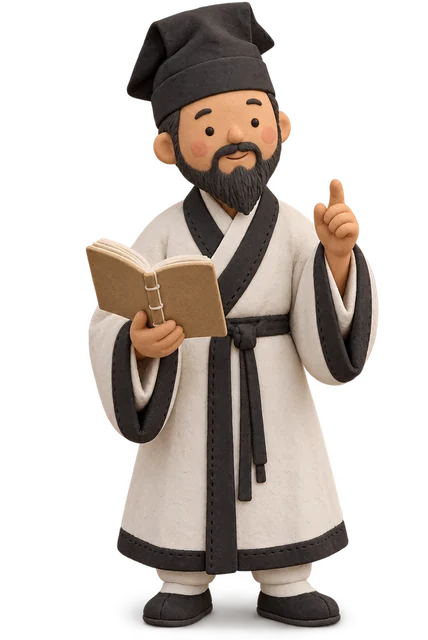
Yi I was born in Gangneung in 1536 as the son of Sin Saimdang. He placed first in the civil service exams nine times and, saying learning must make the country's livelihood and people's lives better, argued for reforms. He was the Joseon Neo-Confucian scholar Yulgok.
Should studying stay only inside books? Yi I, also called Yulgok, was the son of Sin Saimdang. He was a top student who placed first in the civil service exams nine times, but he believed that what you learn should make the country and the people's lives better. He submitted proposals many times to reform the tax and military systems, and he tried to reconcile officials who had split apart. He shows that using what you have learned in the world is real studying.
More detail
Two sources checked
Should studying stay only inside books, or should it be used to change the world? Yi I was born in 1536 in Gangneung as the third son of Sin Saimdang. His pen name was Yulgok. He learned to write from his mother, and at the age of eight he climbed up to a pavilion and wrote a poem that amazed the adults. After losing his mother at sixteen, he went into the Geumgangsan mountains and studied Buddhism, but after about a year he returned to Confucianism.
In 1558 he visited Yi Hwang at Dosan to share teachings, and that same year he came first in the civil service exam with his essay 'Cheondochaek.' He placed first nine times in exams large and small and was called 'Gudo Jangwon-gong' (the nine-time top scorer). He became an official in 1564 and later served even as minister of personnel and of war. He was like a top student who comes first on every test, but what he cared about more was not the score but the world.
He believed that learning should truly improve the country's livelihood and the lives of the people. In 1574 he presented a long memorial, 'Maneon Bongsa,' urging that outdated systems be fixed to suit the times, and he put forward several plans to reduce the abuses of the tribute tax (gongmul, a tax paid in local specialties) and to reform the military system. While serving as magistrate of Cheongju, he created a village compact (hyangyak) in which all villagers took part regardless of status.
In 1575 he wrote the Seonghak Jibyo, a summary of what a king should study, and in 1577 the Gyeongmong Yogyeol for young students. When officials split into the Eastern and Western factions, he tried to reconcile them but was criticized by both sides. He may have been like a classmate who steps in between two sides in a fight and hears hurtful words from both. He died of illness in 1584 at the age of forty-nine.
His life says that using what you have learned in life is real studying. The things we learn today shine even more when they make someone's day better.
Life timeline
- 1558Visits Yi Hwang at Dosan
That winter he took first place in the examination with 'Cheondochaek.' - 1564Begins his official career as Hojo Jwarang (junior official of the Board of Taxation)
- 1568Travels to Ming as secretary of an envoy mission
- 1569Writes and presents the 'Dongho Mundap'
He presented to the new king Seonjo, in question-and-answer form, a plan for setting the country right. - 1574Submits the 'Manon Bongsa'
He submitted a long memorial calling for fixing the system to suit the times. - 1575Publishes the Seonghak Jipyo
- 1577Writes the Gyeongmong Yogyeol
It is a book for children beginning their studies. - 1582Becomes Minister of Personnel
- 1583Submits the Sicmu 6-jo (Six Articles on Urgent Affairs)
He presented to the king six matters to work on in governing the country.
Related events
- 1517Spread of Hyangyak (the Start of Village Codes)
- 1575Factions of the Easterners and the Westerners