 BETA
Person
Yi Jun
1859–1907 · A special envoy to The Hague · Korean Empire
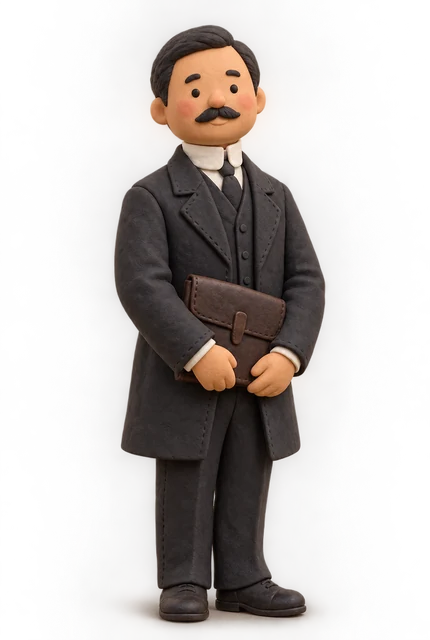
A lawyer and patriotic enlightenment activist who went to The Hague as a special envoy and died there.
He was one of Korea's first prosecutors. In 1907, on King Gojong's order, he went to a big conference in The Hague in the Netherlands. He tried to tell people that Japan had done wrong, but he could not enter the conference hall. In the end he died there.
More detail
Two sources checked
Yi Jun was born in 1859 in Bukcheong, South Hamgyeong Province. He graduated from the Judicial Training School in 1895 and became an assistant prosecutor at the Hanseong Court the next year, becoming one of Korea's first modern prosecutors. He later studied law further at Waseda University in Japan.
In 1898 he joined the Independence Club and took the lead by making street speeches at the Manmin Gongdonghoe (Joint Assembly of the People). When Japan interfered in state affairs around the time of the Russo-Japanese War, he opposed it, and as head of the National Education Society he called for building up the country's strength through education.
In April 1907 he left Seoul on a secret order from Emperor Gojong. He met Yi Sang-seol in Vladivostok and, after joining Yi Wi-jong in St. Petersburg, Russia, arrived in The Hague in the Netherlands in June. They tried to tell the Hague Peace Conference that the Eulsa Treaty had been forced on Korea, but they could not enter the conference hall because of Japanese obstruction.
The three men made Korea's situation known before newspaper reporters. But Yi Jun died in The Hague on 14 July of that year. His remains returned to his homeland in 1963 and were buried in Suyu-dong, Seoul.
Life timeline
- 1895Graduates from the Judicial Training School
- 1896Becomes an assistant prosecutor at the Hanseong Court
Related events
- 1896Independence Club and the Mass Assembly (Manmin Gongdonghoe)
- 1907Dispatch of the Hague Secret Envoys