 BETA
Person
Yi Yuksa
1904–1944 · Resistance poet · Japanese Government-General of Korea
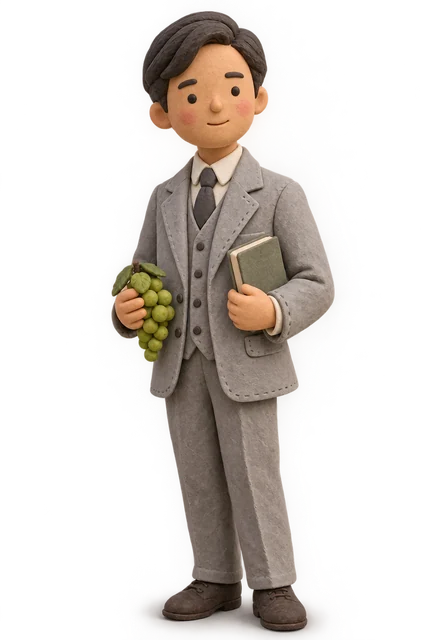
He was a resistance poet who wrote Gwangya (The Wilderness) and Cheongpodo (Green Grapes).
He was a poet who wrote the poems Cheongpodo (Green Grapes) and Gwangya (The Wilderness). His real name was Yi Won-rok. Even though he was put in prison many times, he kept up the independence movement. He died in 1944 in a prison in Beijing, China.
More detail
Two sources checked
Yi Yuksa was born in Andong, North Gyeongsang Province, in 1904 as a descendant of Yi Hwang (Toegye). His real name was Yi Won-rok. As a boy he studied Chinese learning with his grandfather and also attended a modern school.
In 1927 he was first imprisoned after being implicated in the bombing of the Daegu branch of the Joseon Bank. It is said that he took his pen name from the prisoner number he was given then, '264' (yi-yuk-sa).
In 1932 he entered, as a member of the first class, the Joseon Revolutionary Military and Political Cadre School in Nanjing, China, set up by the Uiyeoldan, and received military training. He came back the next year, worked as a newspaper reporter, and published poems and essays.
In 1939 he published Cheongpodo (Green Grapes), which carried his longing for his hometown, and with poems such as Jeoljeong (The Peak) and Gwangya (The Wilderness) he sang of a spirit that would not yield to Japanese rule. He was arrested and imprisoned many times in his life; arrested again in 1943 and taken to Beijing, he died in a Beijing prison in January 1944. Gwangya was published after his death.
Life timeline
- 1927Imprisoned over the bombing of the Daegu branch of the Joseon Bank
- 1932Entered the Joseon Revolutionary Military and Political Cadre School
- 1939Published the poem Cheongpodo (Green Grapes)