 BETA
Person
Yu Seong-ryong
1542–1607 · Chief minister of Joseon · Joseon
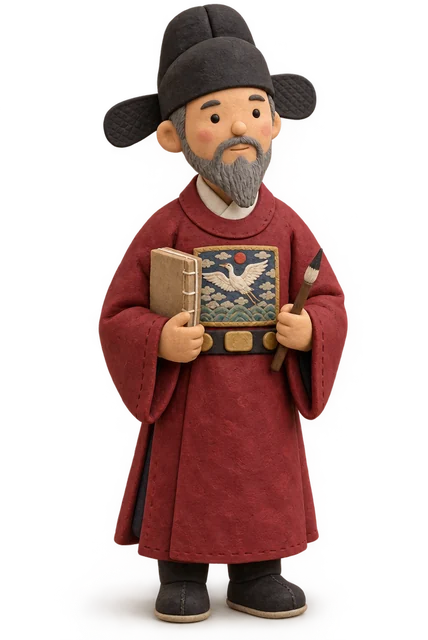
He was the chief minister who directed state affairs during the Imjin War and left the Jingbirok.
Yu Seong-ryong was a high official who led the country's army and affairs during the Imjin War. Before the war, he recommended Yi Sun-sin. After he left office, he wrote the Jingbirok (Record of Lessons from the War), a record of the war, hoping that such a thing would never be suffered again.
More detail
Two sources checked
Yu Seong-ryong was born in 1542 in Uiseong, Gyeongsang Province. His pen name was Seoae, and at the age of twenty-one he went to Yi Hwang and became his disciple. After passing the examination in 1566, he went through important posts such as the Hongmungwan and the Saganwon and won King Seonjo's trust.
In 1591, when the signs of war were growing thick, he recommended Yi Sun-sin, then magistrate of Jeongeup, as Left Naval Commander of Jeolla and Gwon Yul as magistrate of Uiju. Both later did great service in the Imjin War.
When the Japanese army invaded in April 1592, he also served as Minister of War and became dochechalsa (the post that commanded military affairs as a whole in wartime). During the flight, when opinions arose that the king should cross over into Ming territory, he opposed it to the end, saying that if the king crossed the border the way to defend the country would disappear. In 1593 he retook Pyongyang Fortress together with the Ming army, and that year he became Chief State Councillor and led the war effort.
He proposed making weapons such as cannons and rebuilding fortresses, and he proposed setting up the Hullyeon Dogam, which would train a new army, and when it was established in 1594 he took charge of it. He also proposed making salt to relieve starving people.
In 1598, after attacks from his opponents, he left office and returned to his hometown of Andong. There he wrote the war record Jingbirok, with the intention of reflecting on past mistakes and warning against going through such things again. He died in 1607.
Life timeline
- 1566Passes the civil examination
- 1590Becomes Right State Councillor
- 1591Recommends Yi Sun-sin and Gwon Yul
In preparation for war, he proposed raising the two commanders to important posts. - 1592Becomes dochechalsa
He commanded military affairs as a whole during the war. - 1593Becomes Chief State Councillor
- 1594Takes charge of the Hullyeon Dogam
He took charge of the institution that trained a new army and taught training methods. - 1598Leaves office
After leaving office he wrote the Jingbirok.