 BETA
Person
Jose de San Martin
1778–1850 · Protector of Peru · Protectorate of Peru (San Martin Government)
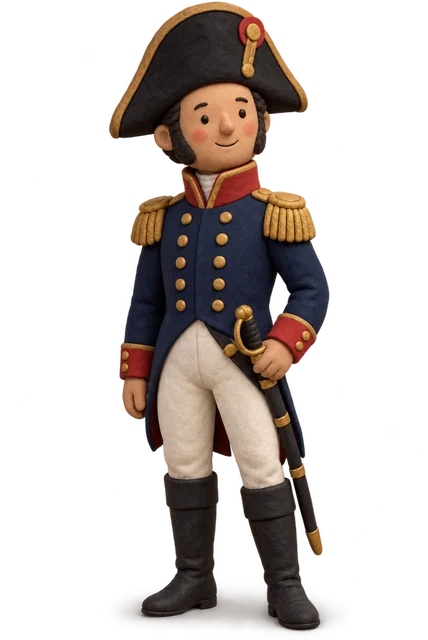
Born in Argentina, he crossed the Andes to free Chile and declared Peru's independence in Lima in 1821. He was a leader of South American independence, honored as a "Liberator" who gave up power and stepped aside when the first Congress met.
Who was the person who thought of crossing the Andes with an army? San Martín, from Argentina, crossed the Andes to make Chile independent, then came by sea and declared Peru's independence in Lima in 1821. When the first Congress met, he gave up power on his own and left. That he knew how to put power down is something that moves us today.
More detail
Two sources checked
Who was the person who thought of crossing the high Andes with an army? José de San Martín was born in 1778 in Yapeyú, in the Río de la Plata (today's Argentina), then ruled by Spain. Some sources give his birth year as 1777. He went to Spain as a child and became a soldier, and he gained experience fighting Napoleon's army.
He came back to his homeland in 1812 and led the independence army. In 1817 he led his army across the high Andes into Chile and won the Battle of Chacabuco, and in 1818 the Battle of Maipú secured Chile's independence.
In his view, Chile's independence alone was not enough. He believed independence could be protected only by bringing down the Spanish viceroy in Lima. In 1820 he sailed with the Chilean fleet and landed at Paracas, and on 28 July 1821 he declared Peru's independence in Lima. On 3 August he became "Protector of Peru," and he is said to have issued decrees such as freeing the children of enslaved people and ending the tribute paid by Indigenous people. These decrees come from general overviews, so they need more checking.
The twist comes next. After meeting Bolívar in Guayaquil in 1822, he gave up power and left Peru when the first Congress met that September. He lived quietly in Europe and died in 1850 in Boulogne-sur-Mer, France.
He is honored as a "Liberator" in Argentina, Chile and Peru alike. Like a class president who finishes the job and hands the seat to the next person, his knowing how to put down the power he held moves us even more today.
Life timeline
- 1817Crossed the Andes and won the Battle of Chacabuco
- 1818Secured Chile's independence with the Battle of Maipu
- 1821Became Protector of Peru (August 3)
- 1850Died in Boulogne-sur-Mer, France