 BETA
Person
Manuel I
1469–1521 · King of Portugal · Kingdom of Portugal
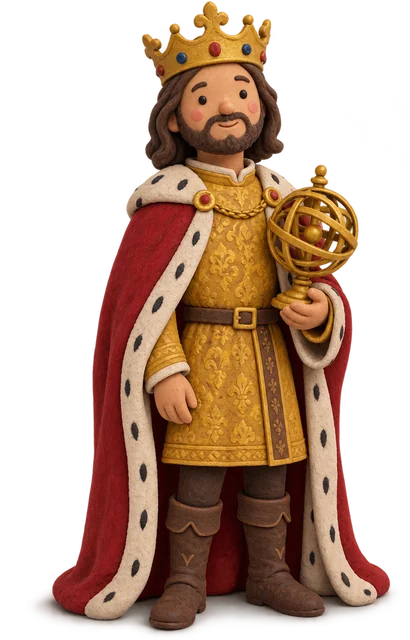
The "Fortunate King," who opened Portugal's golden age with the India route and the arrival in Brazil.
Manuel I was the king who sent Vasco da Gama and Cabral to sea. The spice trade made the country very rich, so he was called the "Fortunate King." But there was also a dark side: he forced Jews to convert.
More detail
Two sources checked
Manuel I was born in 1469 at Alcochete near Lisbon. He was a royal far from the succession, but when the son of his cousin John II died young, he became king in 1495. That is why he got the nickname 'the Fortunate.'
In his time Vasco da Gama opened the sea route to India (1498), and Cabral's fleet reached Brazil (1500). He sent a fleet to India every year and had Almeida and Albuquerque build forts and trading posts in the Indian Ocean. Through the spice trade the crown became one of the richest in Europe.
With that money he built structures such as the Jeronimos Monastery and the Belem Tower, and their distinctive decoration carved with ropes and sea creatures is called the 'Manueline style.' He also had the law codes newly compiled and published.
However, as a condition of marrying a Spanish princess, he said he would expel the Jews, but in practice he forcibly converted most of them. At the time of the Lisbon massacre of 1506 he severely punished those who had led it. He died in Lisbon in 1521 and was buried at the Jeronimos Monastery.
Life timeline
- 1495Became king
- 1497Married the Spanish princess Isabella
- 1512Began printing the new law code (the Manueline Ordinances)
Related events
- 1496Manuel I's Expulsion Order and the Forced Conversion of the Jews
- 1497Vasco da Gama Sails from Lisbon and Opens the Sea Route to India
- 1500Cabral's Fleet Reaches Brazil
- 1502Building of Jerónimos Monastery
- 1505Almeida Becomes the First Viceroy of India
- 1506Lisbon Massacre
- 1514Building of Belem Tower