 BETA
Person
Alexander I
1777–1825 · Emperor of Russia · Russian Empire
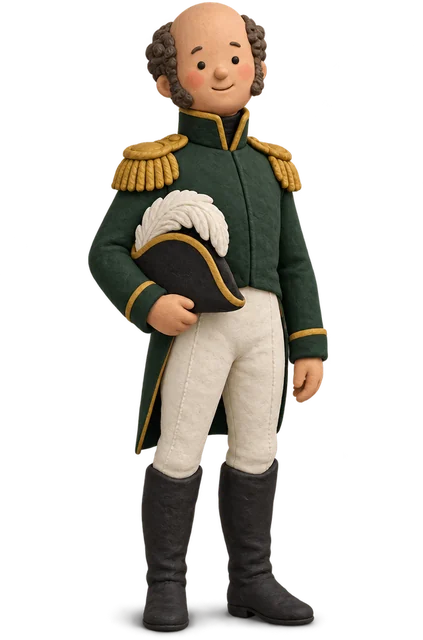
The emperor who defeated Napoleon and marched as far as Paris, and led the Congress of Vienna and the Holy Alliance.
Alexander I was the emperor who ruled Russia from 1801. He defeated Napoleon's army and went as far as Paris. After the war he took the lead in setting the new order of Europe.
More detail
Two sources checked
Alexander I was born in 1777 as a grandson of Catherine II. His grandmother gave him an Enlightenment thinker from Switzerland as a teacher to teach him ideas of freedom and reason.
After his father Paul I was murdered by court nobles in 1801, he became emperor at twenty-three. At first he discussed reforms with his young friends and had Speransky draw up a plan close to a constitution. In 1811 he opened the Tsarskoye Selo Lyceum (a school) for the sons of nobles, and Pushkin was one of its first students.
When Napoleon invaded in 1812, he refused to the end to make peace, and in 1814 he led the Russian army into Paris. At the Congress of Vienna he gained the Kingdom of Poland and proposed the Holy Alliance, and was counted the most powerful monarch in Europe.
But in his later years he became deeply absorbed in religion and moved away from reform. He died suddenly in 1825 in the southern city of Taganrog, and his death left so many stories that a legend arose that he had not really died but had become a hermit monk.
Life timeline
- 1801Became emperor
- 1811Opened the Tsarskoye Selo Lyceum
- 1814Led the Russian army into Paris