
Person
Mikhail Gorbachev
1931–2022 · General Secretary and President of the Soviet Union · Soviet Union (Union of Soviet Socialist Republics)
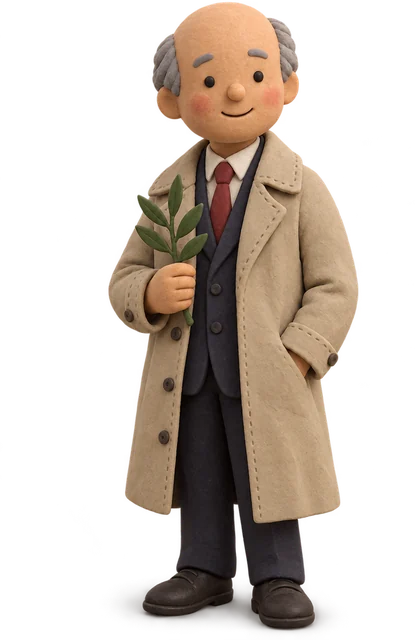
Born in 1931 in a farming village near Stavropol, Gorbachev became General Secretary of the Communist Party in 1985, promoted reform and openness, and signed a nuclear arms treaty with the United States, helping to end the Cold War. But the country shook from within, and on December 25, 1991, he resigned as the last president of the Soviet Union.
What kind of person ended the Cold War? Gorbachev became General Secretary of the Communist Party in 1985, promoted reform and openness, and signed a nuclear arms treaty with the United States. He also opened the way to the first diplomatic ties with South Korea, but the country shook from within, and he resigned as president on December 25, 1991, as the Soviet Union disappeared. It shows us that big decisions are judged differently by different people.
More detail
Two sources checked
What kind of person ended the Cold War? Mikhail Gorbachev was born in 1931 in Privolnoye, a farming village in the Stavropol region of southern Russia. From the age of fifteen he drove a combine harvester with his father and won a medal, and while studying law at Moscow State University he met his wife, Raisa.
In March 1985, at the age of 54, he became General Secretary of the Communist Party and promoted perestroika (reform) and glasnost (openness). In 1987 he signed a treaty with U.S. President Reagan to get rid of intermediate-range nuclear missiles, and in 1989 he pulled his troops out of Afghanistan. When the countries of Eastern Europe overthrew their communist governments, he did not send in troops.
In 1990 he became the first (and last) president of the Soviet Union, and he received the Nobel Peace Prize for ending the Cold War. That June in San Francisco he met South Korean President Roh Tae-woo and opened the way to diplomatic ties between the Soviet Union and South Korea, and in April 1991 he became the first Soviet head of state to visit South Korea, on Jeju Island.
But at home, goods ran short and the republics demanded independence, and the Soviet Union wobbled. It was a bit like trying to change a class rule while one group after another announces it will do its own thing. After he was held prisoner and then freed in the coup of August 1991, he lost his power, and on December 25 he resigned as president.
Abroad he is seen as the leader who ended the Cold War, while inside Russia many judge that he brought the country down. He died in August 2022. That the same choice was peace for some and a loss for others shows that a big decision does not make everyone smile alike.
Life timeline
- 1985Became General Secretary of the Communist Party
- 1987Signed the Intermediate-Range Nuclear Forces (INF) Treaty with the United States
- 1990Became president of the Soviet Union
- 1990Received the Nobel Peace Prize
- 1991Became the first Soviet head of state to visit Korea (Jeju)
Related events
- 1979Soviet Invasion of Afghanistan
- 1985Gorbachev's Perestroika and Glasnost
- 1990Establishment of Korea-Soviet Relations
- 1991August Coup
- 1991Dissolution of the Soviet Union and the Founding of the Commonwealth of Independent States (CIS)