 BETA
Person
Mikhail Kutuzov
1745–1813 · Commander-in-chief of the Russian army · Russian Empire
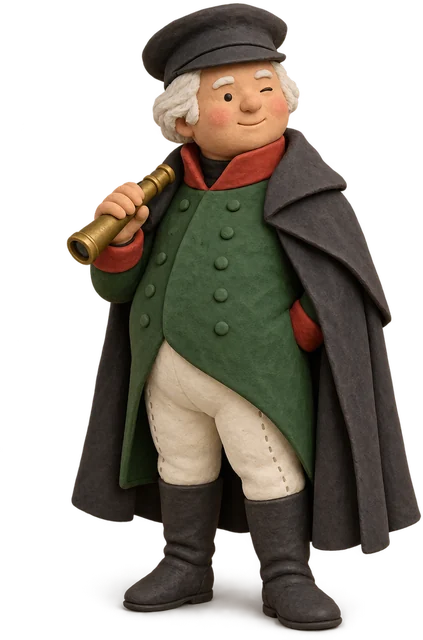
Commander-in-chief of the Russian army against Napoleon in 1812, who made the decision to give up Moscow after the Battle of Borodino.
Kutuzov was commander-in-chief of the Russian army that fought Napoleon in 1812. After the fighting at Borodino, he gave up Moscow to protect his army. He chased the retreating French army and won a great victory.
More detail
Two sources checked
Mikhail Kutuzov was born in 1745 in Saint Petersburg into a military family. As a young man he went to war against the Turks and was shot in the head twice, and from those wounds he could not properly use his right eye.
When the Russian-Austrian allied army was heavily defeated by Napoleon at the Battle of Austerlitz in 1805, he commanded the allied army, but the actual plan of operations was decided by the emperors. After that he won the war against the Turks and made a peace treaty in May 1812.
In August 1812, when Napoleon's great army pushed deep into the country, the sixty-seven-year-old Kutuzov became commander-in-chief. After fighting a great battle at Borodino on September 7, to preserve his army he decided to give up Moscow, saying 'Though we lose Moscow, we have not lost Russia.' Then, as the French army withdrew, he pursued it and broke it badly.
In April 1813, while leading the Russian army into German lands, he died of illness. He was buried in Kazan Cathedral in Saint Petersburg, and in Tolstoy's War and Peace he is portrayed as a wise general who understood the hearts of the Russian people.
Life timeline
- 1805Commanded the allied army at the Battle of Austerlitz
- 1812Became commander-in-chief of the Russian army