 BETA
Person
Nicholas II
1868–1918 · Emperor of Russia · Russian Empire
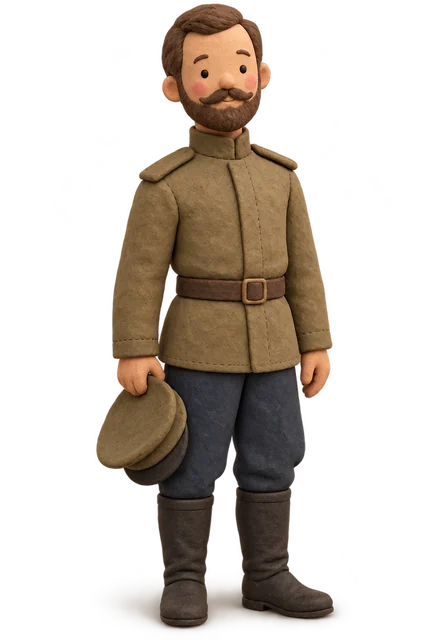
The last emperor of the Russian Empire, who lived through the Russo-Japanese War, the 1905 Revolution and World War I, and stepped down in 1917.
Nicholas II was the last emperor of Russia. He lost the Russo-Japanese War and lived through the 1905 Revolution and World War I. In the revolution of 1917 he gave up the throne.
More detail
Two sources checked
Nicholas II was born in 1868 as the eldest son of Alexander III. In 1891, as crown prince, while traveling in East Asia he was struck on the head by a policeman's sword in Otsu, Japan, and on the way home he dug the first spadeful of the Trans-Siberian Railway at Vladivostok.
His father died suddenly in 1894 and he became emperor at twenty-six, and soon married Alexandra, who was of German origin. At his coronation in 1896, Min Yeong-hwan of Joseon Korea also came as a congratulatory envoy. Like his father, he tried to hold firmly to the emperor's power, and while extending Russia's power into Manchuria and the Korean Peninsula he was defeated in the Russo-Japanese War in 1904.
When revolution spread after Bloody Sunday in 1905, he opened the Duma (parliament) through the October Manifesto, but he hesitated to the end about sharing power. Because his only son Alexei suffered from hemophilia and the empress came to depend on Rasputin, trust in the imperial family fell even further.
After entering the First World War in 1914 he became commander-in-chief in person in 1915, but the war dragged on, and in the March 1917 revolution he abdicated. In July 1918 he was executed with his family by the Bolsheviks in Yekaterinburg, and in 2000 the Russian Orthodox Church declared him a saint.
Life timeline
- 1891Attacked and wounded in Otsu, Japan
- 1894Became emperor
- 1896Crowned in Moscow
- 1917Abdicated
- 1918Executed with his family in Yekaterinburg
Related events
- 1891Building of the Trans-Siberian Railway
- 1895Triple Intervention
- 1904Russo-Japanese War (Russia's Defeat)
- 1905Bloody Sunday and the 1905 Revolution
- 1905October Manifesto and the Opening of the State Duma (Parliament)
- 1914Russia Enters World War I and the Battle of Tannenberg