 BETA
Person
Peter I
1672–1725 · Emperor of Russia · Russian Empire
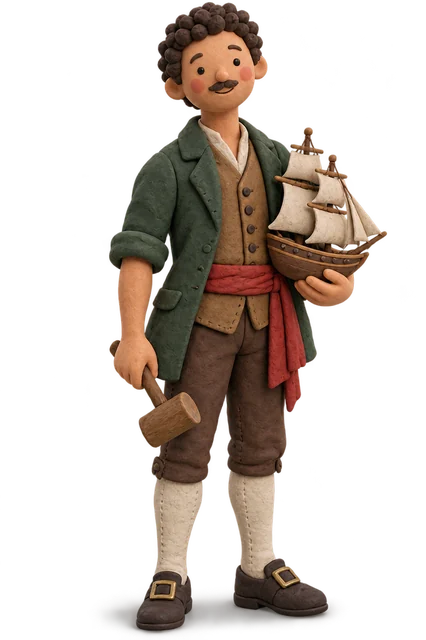
Peter I was born in Moscow in 1672 and became tsar in 1682. He reformed Russia with technology he learned in Western Europe and founded Saint Petersburg, and in 1721 he became the first emperor, but the cost was paid in the suffering of the peasants.
Would you believe a tsar secretly worked in a foreign shipyard? Peter I learned shipbuilding in Western Europe, changed the army and the system of government, founded Saint Petersburg, and in 1721 became Russia's first emperor. But the peasants suffered under heavy taxes and labor. His story reminds us who paid the price of changing a country.
More detail
Two sources checked
Would you believe a tsar over two meters tall secretly worked in a foreign shipyard? Peter I was born in Moscow in 1672 to Tsar Alexis and his second wife, Natalya. In 1682, at the age of ten, he became tsar together with his half-brother Ivan V, but his sister Sophia served as regent.
The young tsar did not stay in the palace. In a village near Moscow he formed a "play army" with boys his own age, and he visited the foreigners' quarter and became absorbed in ships and technology. In today's terms, a group game turned into a real national army.
In 1689 he drove out Sophia, and in 1697-1698 he hid his name and joined a diplomatic mission to Western Europe, working with his own hands in shipyards in the Netherlands and England. When he came back, he had nobles' beards cut off and made them wear Western clothes and use a new calendar. The nobles were probably shocked.
The crisis came from war. In the Great Northern War against Sweden he lost at Narva in 1700, but he built a new army and navy and won at Poltava in 1709. In 1703 he founded Saint Petersburg at the mouth of the Neva River and made it the capital, and in 1721, after winning the war, he received the title "Emperor," and the Tsardom became the Russian Empire. His reforms, which created the Senate, the Table of Ranks, and the Academy of Sciences, made Russia a European power.
But the cost was paid by peasants who were dragged off to heavy taxes, conscription, and the building of cities. In 1698 he executed more than a thousand musketeers who had rebelled, and in 1718 he had his eldest son, Alexei, who opposed the reforms, die in prison. In 1725 he died without naming an heir. Peter's story teaches us that behind a great change to a country, we should also remember who paid the price.
Life timeline
- 1682Became co-tsar with Ivan V at the age of ten
- 1696His brother Ivan V died and he ruled alone
- 1698Crushed the rebellion of the musketeers (streltsy)
- 1712Formally married Catherine
- 1718His son Alexei died in prison
Related events
- 1689Peter Drives Out Sophia and Takes Power
- 1695The Azov Campaigns and the Beginning of the Russian Navy
- 1697Peter's Grand Embassy to Western Europe
- 1698The Beard Tax and the New Calendar: Peter's Westernizing Reforms
- 1700Start of the Great Northern War and the Battle of Narva
- 1703Founding of Saint Petersburg
- 1709Battle of Poltava
- 1711The Senate and the Colleges: Building New Offices of Government
- 1712Moving the Capital to Saint Petersburg
- 1721Treaty of Nystad and the Proclamation of the Russian Empire
- 1722Establishment of the Table of Ranks
- 1724Founding of the Saint Petersburg Academy of Sciences
- 1725Bering's First Kamchatka Expedition and the Bering Strait