 BETA
Person
Theodore Roosevelt
1858–1919 · 26th President of the United States · United States
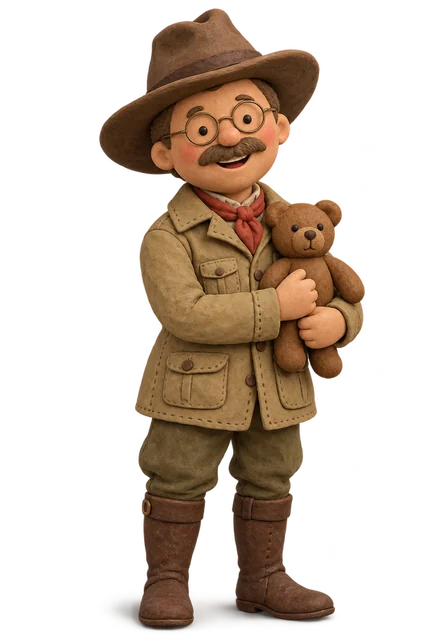
He was a reform president who curbed the monopolies of big companies and protected nature. He mediated the Treaty of Portsmouth that ended the Russo-Japanese War, but in the process he accepted Japan's rule over Korea.
Theodore Roosevelt became president at the age of forty-two. He stopped big companies from holding monopolies and protected forests and nature. He led the meeting that ended the Russo-Japanese War, but he turned a blind eye to Japan taking over Korea.
More detail
Two sources checked
Theodore Roosevelt was born in 1858 into a wealthy family in New York. As a child he was weak from asthma, but he trained his body through exercise. After graduating from Harvard he served as a New York state legislator, New York City police commissioner and assistant secretary of the navy, and in the 1898 war with Spain he became a hero leading the volunteer cavalry 'Rough Riders'.
After serving as governor of New York and vice president, he became president at the age of forty-two in 1901 when McKinley was assassinated. He is the youngest president in American history. He broke the monopolies of big businesses such as railroads and oil through law, created food and drug safety laws, and protected nature by designating vast forests and lands as national forests and national monuments. In 1904 he began construction of the Panama Canal.
In 1905 he mediated the Portsmouth peace conference that ended the Russo-Japanese War, and the next year he received the Nobel Peace Prize, the first for an American. But in July of the same year his secretary of war, Taft, met the Japanese prime minister Katsura and concluded the 'Katsura-Taft Agreement', in which they recognized each other's rule over the Philippines and over Korea. Roosevelt approved it, and the American help that the Korean Empire had hoped for never came.
In 1912 he formed the Progressive Party and ran for president again, but lost. He is also known through the 'teddy bear' toy named after him. He died in 1919.
Life timeline
- 1898Led the Rough Riders in the war with Spain
- 1901Became vice president
- 1901Took office as president
- 1904Began construction of the Panama Canal
- 1905Mediated the Portsmouth peace conference
- 1906Received the Nobel Peace Prize
- 1912Ran as the Progressive Party candidate
Related events
- 1890The Sherman Antitrust Act and the Breakup of Standard Oil
- 1898Spanish-American War
- 1899Philippine-American War
- 1901Shooting of President McKinley
- 1904Building of the Panama Canal
- 1905Mediation of the Portsmouth Peace and the Taft-Katsura Agreement
- 1906Antiquities Act and the National Monuments System