 BETA
Person
Woodrow Wilson
1856–1924 · 28th President of the United States · United States
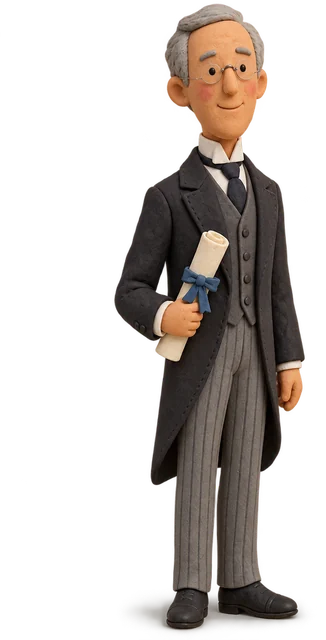
After World War I he put forward the "Fourteen Points" for peace and national self-determination and proposed the League of Nations, which gave great hope to colonized peoples.
Woodrow Wilson was the president during World War I. When the war ended he put forward the idea that "every people should decide its own future." These words gave hope to Koreans who carried out the March 1st Movement too.
More detail
Two sources checked
Woodrow Wilson was born in 1856 in Virginia, the son of a minister, and spent the Civil War years in Georgia. A political scientist with a doctorate from Johns Hopkins University, he went from president of Princeton University and governor of New Jersey to become president in 1913.
He created the Federal Reserve System (the central bank) and strengthened laws against monopolies. When World War I broke out he first stayed neutral, but when German submarines repeatedly attacked American ships, he decided in April 1917 to enter the war. Meanwhile, his administration widened discrimination that segregated Black and white employees in federal offices, for which it is criticized today.
In January 1918 he announced the 'Fourteen Points' for the postwar world order. Their core was 'national self-determination', the idea that each people should decide its own destiny, and the founding of a League of Nations. These principles were applied mainly to the peoples of Europe who had been ruled by defeated countries, but they gave great hope to many colonized peoples and also influenced Korea's March 1st Movement in 1919.
At the 1919 Paris Peace Conference he took the lead in creating the League of Nations and received the Nobel Peace Prize. But the US Senate rejected the treaty, so the United States did not join the League. While traveling the country to promote the treaty he collapsed with a stroke, and he died in 1924.
Life timeline
- 1902Became president of Princeton University
- 1911Became governor of New Jersey
- 1913Took office as president
- 1917Decided to enter World War I
- 1918Announced the Fourteen Points
- 1919Attended the Paris Peace Conference
- 1919Collapsed with a stroke
Related events
- 1914Ludlow Massacre
- 1917Espionage Act and Limits on Speech Against the War
- 1917Selective Service Act of 1917
- 1917American Entry into World War I
- 1917Publication of the Zimmermann Telegram
- 1918Wilson's Fourteen Points (National Self-Determination)
- 1919The Senate Rejects the Treaty of Versailles