 BETA
EventPrehistory and Gojoseon
Bangudae Petroglyphs in Ulju: Whale Hunting Carved in Rock
5000–1000 BCE (estimated) · Korea · Bangudae on Daegokcheon Stream
Today: Daegok-ri, Eonyang-eup, Ulju County, Ulsan
The Bangudae Petroglyphs are pictures carved on rock by prehistoric people, showing whales and whale hunting.
What happened
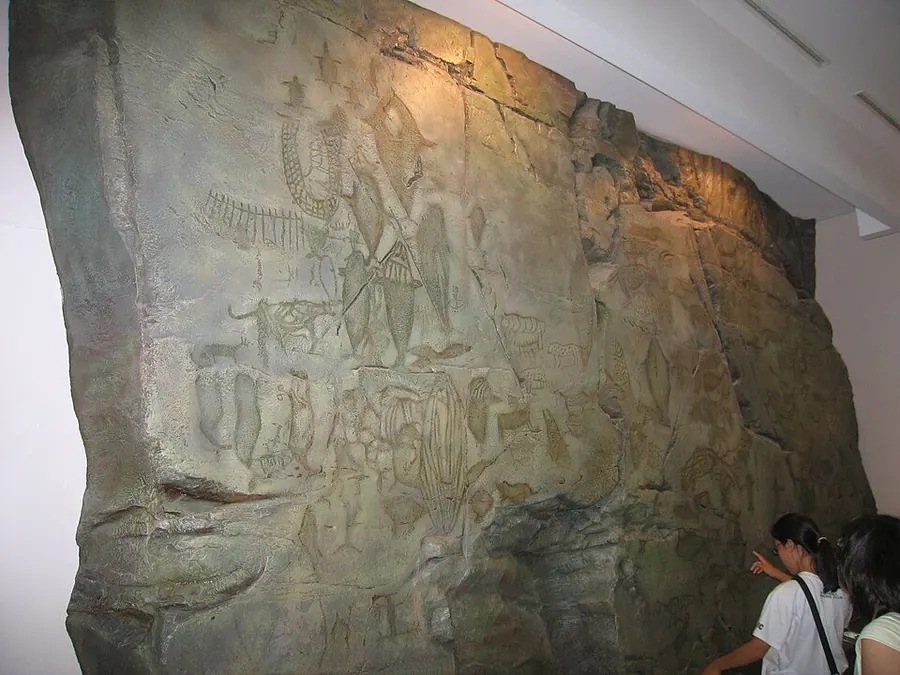
On the wide rock at Bangudae in Ulsan, there are about 300 pictures carved by people long ago. There are whales, deer, tigers, people, and boats. Whales are the most common, and there are also scenes of catching whales from boats. It is counted as one of the oldest whale-hunting pictures in the world, and it has become a World Heritage Site.
More detail
Two sources checked
Why it happened
Whales have long passed through the sea off Ulsan. Catching a single whale could feed a whole village for a long time, but hunting a large whale was extremely dangerous.
Scholars think that people of long ago carved pictures into the rock to pray for success in hunting and whaling, and to pass important knowledge, such as how to catch whales, on to the next generation.
What happened
About 300 pictures have been carved, by pecking or grinding, onto a broad rock face beside Daegok Stream in Ulju County. They show animals such as whales, deer, wild boar and tigers, as well as people, boats, harpoons and nets.
Whales are the most numerous. There are whales carrying calves, whales with harpoons stuck in them, and even scenes of several people in a boat towing a whale. The carvings first became known to scholars in December 1971.
What came of it
The Bangudae Petroglyphs are counted among the earliest pictures of whaling in the world. They became a National Treasure in 1995.
In July 2025, together with the nearby Cheonjeon-ri petroglyphs, they were inscribed on the UNESCO World Heritage List under the name 'Petroglyphs along the Bangucheon Stream.' However, the dam downstream sometimes floods them every year, so preservation is a major challenge.