 BETA
EventPrehistory and Gojoseon
Building of Dolmens: Tombs of Chiefs
1100–300 BCE (estimated) · Korea · All over the Korean Peninsula (Gochang, Hwasun, Ganghwa, and others)
Today: Gochang, Jeonbuk Special Self-Governing Province; Hwasun, South Jeolla Province; Ganghwa, Incheon Metropolitan City; and other places
Dolmens are tombs that rulers of the Bronze Age made with huge stones.
What happened
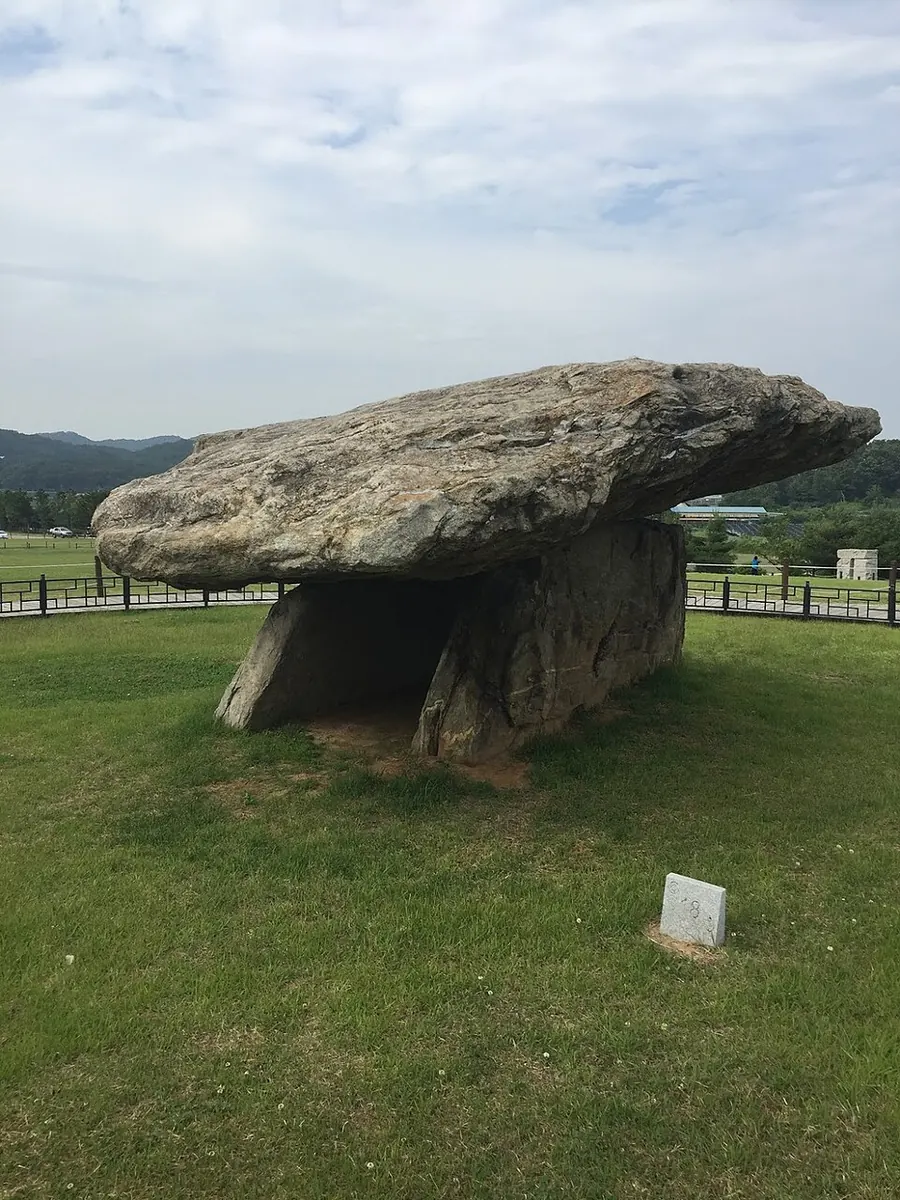
Dolmens are the tombs of chiefs of the Bronze Age. They were made by placing a very wide, heavy stone on top of supporting stones. To move stones weighing tens of tons, hundreds of people had to join their strength. About half of the world's dolmens are on the Korean Peninsula, and the dolmens of Gochang, Hwasun, and Ganghwa became World Heritage sites.
More detail
Two sources checked
Why it happened
In the Bronze Age, chiefs (gunjang) who led many people appeared. They wanted to show, even after death, the power they had enjoyed in life.
So they moved huge stones to make tombs, and these are dolmens. Not every dolmen is a chief's tomb, and some are thought to have served as ritual sites for a village or as markers of a burial ground.
What happened
A dolmen is shaped with a broad capstone placed on supporting stones. The table type, in which the supporting stones are tall and look like a table, is found mainly north of the Han River, while the baduk-board type, with a large stone placed on low supporting stones, is mainly in the south. There is also the capstone type (gaeseoksik), in which only a capstone sits on the ground without supporting stones.
The Korean Peninsula has tens of thousands of dolmens, said to be about half of the world's dolmens. In Hwasun, South Jeolla, and Gochang, North Jeolla, hundreds are gathered in one place.
What came of it
To cut and move a capstone weighing tens of tons, hundreds of people had to pool their strength using logs and ropes. So dolmens are seen as evidence that there were rulers who could move many people.
The dolmen sites of Gochang, Hwasun, and Ganghwa were inscribed as a UNESCO World Heritage Site in December 2000.
Links with other countries
There are many dolmens in the Liaodong region too, so Liaodong and the Korean Peninsula are seen as having been part of the same megalithic culture area.