 BETA
EventOpening of the Ports and the Korean Empire
Signing of the Treaty of Ganghwa (Joseon-Japan Treaty of Amity)
1876 · Joseon · Ganghwabu, Joseon
Today: Ganghwa County, Incheon Metropolitan City
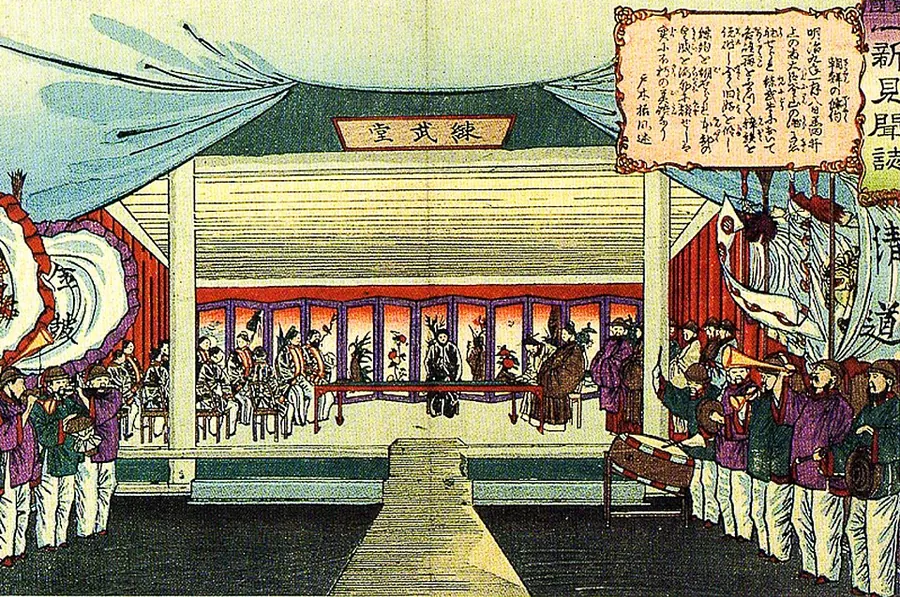
In February 1876 on Ganghwa Island, Joseon's representative Sin Heon and Japan's representative Kuroda Kiyotaka signed the 12-article Treaty of Ganghwa Island (Korea-Japan Treaty of Amity). Under pressure from Japanese military force, Joseon opened ports and gave up consular jurisdiction, in its first modern unequal treaty.
What happened
Why did Joseon open the door it had kept closed? After the Unyo incident with a Japanese warship in 1875, Japan came with warships and pressed Joseon to sign a treaty. In 1876 on Ganghwa Island, Joseon signed an unfair treaty that opened two more ports besides Busan and let Japanese consuls hold trials. After that, Joseon came to sign treaties with other countries one after another. It teaches the lesson of checking carefully whether a promise is fair.
More detail
Two sources checked
Why it happened
Why did Joseon come to open the door it had kept closed? In 1875 the Japanese warship Unyo entered the waters off Ganghwa Island without permission and exchanged fire with Joseon's batteries. Using this as an excuse, Japan came the next year with warships and pressed Joseon to sign a treaty.
Meanwhile, thinking inside Joseon was also changing. Officials such as Bak Gyu-su saw that simply refusing again and again was not good for the country. It was like being pushed again and again by one person in a group chat and wondering more and more whether pretending not to notice was really the best move.
What happened
In February 1876 (the 3rd day of the 2nd lunar month), at the Yeonmudang in Ganghwa-bu, Joseon's representative Sin Heon and Japan's representative Kuroda Kiyotaka put their seals on a treaty of 12 articles. Its formal name is 'Joil Suho Jogyu' (the Treaty of Amity between Joseon and Japan).
But the contents of the treaty were tilted heavily to one side. It was agreed that two more ports besides Busan would be opened (later Wonsan and Incheon), and Japanese ships were allowed to survey Joseon's coast freely. It also included 'consular jurisdiction' (yeongsa jaepangwon): if a Japanese person committed a crime in an open port, a Japanese consul, not Joseon, would hold the trial.
What came of it
What did this treaty leave behind? It was the first modern treaty Joseon signed, but it was an 'unequal treaty' favoring only Japan. Calling Joseon a 'jaju-guk' (an independent state) in Article 1 also carried the aim of separating Joseon from Qing.
Under regulations signed later the same year, Japanese money could be used in the open ports and Japanese goods were not charged customs duties. After this treaty, Joseon went on to sign treaties with other countries one after another.
This event shows that each sentence of a promise can change a country's future. So people today can learn how important it is to check carefully whether the contents are fair when making an agreement with another country.
People in this event
- Choe Ik-hyeon — He carried an axe and sent a petition against the treaty.
- O Gyeong-seok — As an interpreter-official (munjeonggwan), he met the Japanese side first and helped with the practical work.
- Gang Wi — He helped Sin Heon, Joseon's representative, and handled the practical work of the talks.
- Sin Heon — As Joseon's representative, he negotiated with Japan and signed the treaty.