 BETA
Person
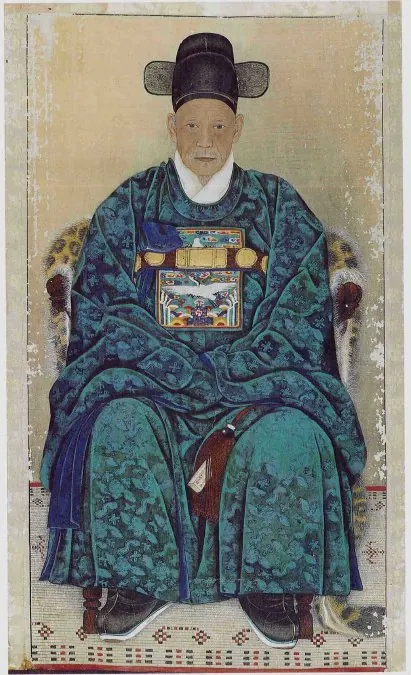
Choe Ik-hyeon
1833–1907 · A righteous army leader and Confucian scholar · Joseon

A Confucian scholar who opposed the opening of the ports and Japan all his life and raised a righteous army in his 70s.
He was a scholar who opposed opening the country's doors all his life. In 1876 he carried an axe, knelt in front of the palace, and submitted a writing of opposition. At age 74 he raised a righteous army against Japan. He was captured and died on Tsushima Island in Japan.
More detail
Two sources checked
Choe Ik-hyeon was a scholar and official born in 1833 in Pocheon, Gyeonggi Province. From the age of fourteen he studied under the scholar Yi Hang-ro and took to heart the teaching to cherish the country as one's own family.
He spoke plainly to anyone if he thought something was not right. In 1873 he submitted a memorial criticizing the rule of Heungseon Daewongun, which became an occasion for the Daewongun to step down. In 1876, when Korea was about to conclude a treaty with Japan, he prostrated himself before the palace carrying an axe and submitted a written objection meaning that, rather than make the treaty, the king should punish him, and he was exiled to Heuksando.
When the Eulsa Treaty was concluded in 1905, he cried out that the treaty should be annulled and the ministers who had led the way should be punished. The next year, 1906, at the age of 74, he raised a righteous army at Taein in North Jeolla Province.
When he found that the troops he faced at Sunchang were the Korean Empire's own army, he stopped fighting, saying that compatriots cannot fight one another, and was captured. He was taken to Tsushima Island in Japan, held there, and died there.
Life timeline
- 1873Submitted a memorial criticizing Heungseon Daewongun
- 1876Submitted a memorial against the treaty, carrying an axe
- 1906Raised a righteous army at Taein
Related events
- 1865Reconstruction of Gyeongbokgung Palace
- 1873Heungseon Daewongun Steps Down and Gojong Rules Directly
- 1876Signing of the Treaty of Ganghwa (Joseon-Japan Treaty of Amity)
- 1876Wijeong Cheoksa Movement (Memorials Against Opening the Ports and the Yeongnam Mass Petition)
- 1905Eulsa Righteous Armies
- 1905Eulsa Treaty (Loss of Diplomatic Rights)