 BETA
EventThree Kingdoms Period
Erection of the Gwanggaeto Stele
414 CE · Goguryeo · East of Gungnaeseong, Goguryeo
Today: Taiwang Township, Ji'an, Jilin, China
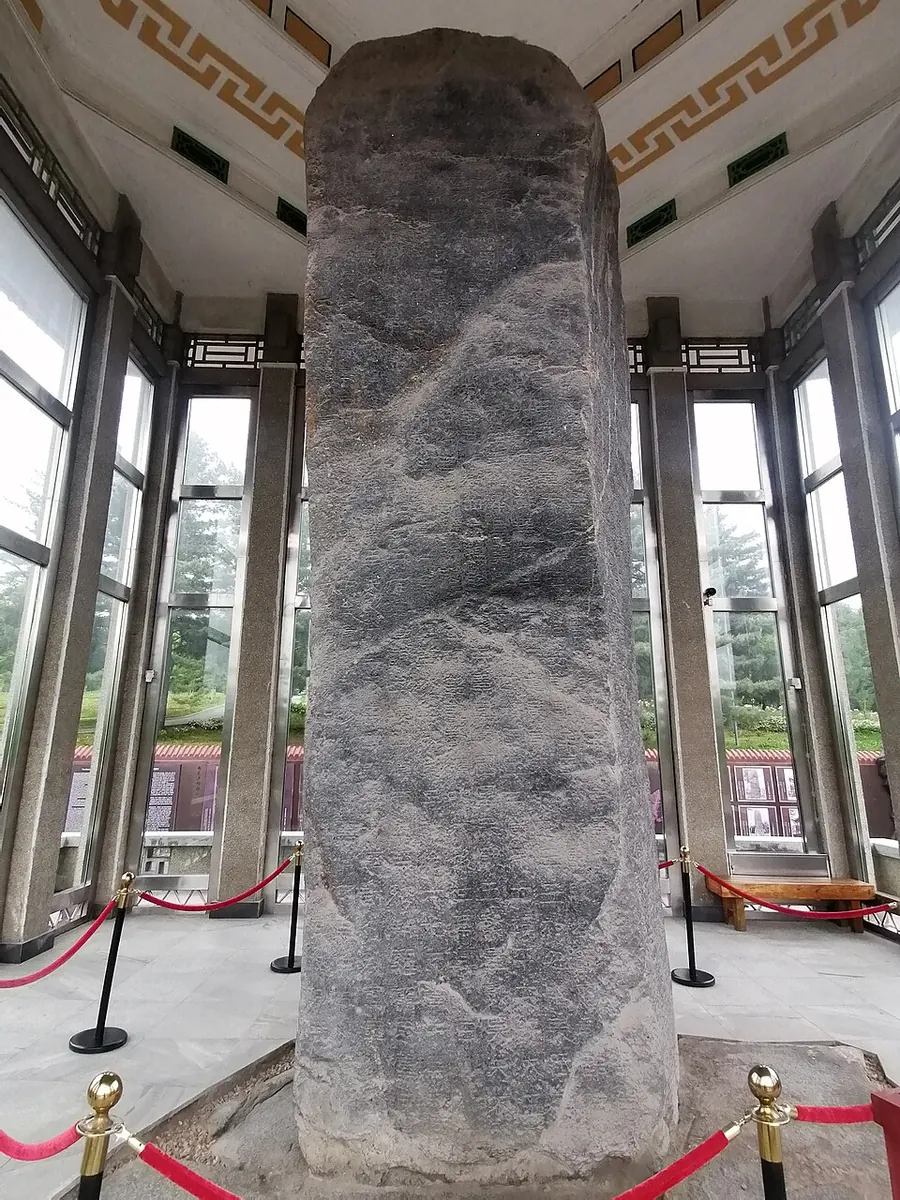
In 414, King Jangsu set up a huge stone stele carved with the deeds of his father, Gwanggaeto the Great.
What happened
In 414, King Jangsu set up a large stele carved with the deeds of his father, Gwanggaeto the Great. It is about 6.4 m tall, higher than two floors of an apartment building. About 1,775 Chinese characters are carved on its four sides. It is the most important record left directly by the people of Goguryeo.
More detail
Two sources checked
Why it happened
When Gwanggaeto the Great died in 412, his son King Jangsu wanted to preserve his father's achievements forever.
It was also necessary to leave clear rules on how to designate and manage the people (sumyoin) who would guard and care for his father's tomb.
What happened
In 414, he erected a huge stone pillar about 6.39 m high at Ji'an in Jilin, China (the old Gungnaeseong). It is higher than the second floor of an apartment building. About 1,775 Chinese characters were carved on the four faces of a large, unfinished stone.
The text is in three parts. The first part is the story of the founder King Chumo (Jumong) founding the state, the second part is a record, year by year, of Gwanggaeto the Great's conquests, and the third part is regulations about the 330 households that would guard the tomb.
What came of it
This stele is the longest and most important record left directly by the people of Goguryeo. It also tells us that the people of Goguryeo regarded themselves as 'descendants of heaven.'
However, Japanese scholars have read the passage in the inscription about the 'Sinmyo year (391)' as meaning that Wa crossed the sea and made Baekje and Silla its subjects. Korean scholars re-examined the interpretation of the characters and the sentence structure and read it differently, for example taking Goguryeo as the subject, and the debate continues to this day.
Links with other countries
The debate in modern Japanese historiography about the Imna Ilbonbu theory (interpretation of the Sinmyo year passage)
People in this event
- Gwanggaeto the Great — He is the main figure on the stele, whose conquests are carved year by year.
- Jangsu — In 414, he set up this large stele to honor his father.