 BETA
EventJoseon Period
Jeong Seon's Inwang Jesaekdo and True-View Landscape Painting
1751 · Joseon · Inwangsan, Hanyang
Today: Inwangsan, Jongno-gu, Seoul, Korea
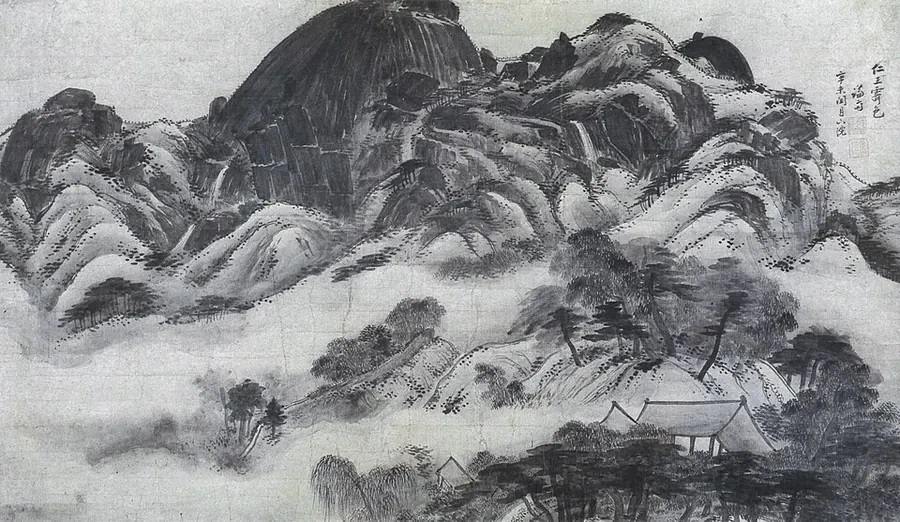
Painted by the 76-year-old Jeong Seon, it shows Inwangsan after the rain cleared and is the masterpiece of jingyeong sansu-hwa (true-view landscape painting).
What happened
At that time, painters mostly followed Chinese paintings and drew imaginary scenery. Jeong Seon looked at Korea's own mountains and rivers directly and painted them. In 1751, at the age of 76, Jeong Seon painted Inwangsan in ink after the rain had stopped. This painting, the Inwang Jesaekdo, is a National Treasure.
More detail
Two sources checked
Why it happened
Early Joseon painters mostly looked at Chinese picture books and drew Chinese-style mountains and rivers and imaginary scenery. Jeong Seon (1676-1759) went around visiting the Diamond Mountains and the mountains and rivers around Hanyang in person and drew Korea's scenery as he saw it with his own eyes.
Landscape painting that draws real scenery in this way is called 'jingyeong sansuhwa' (true-view landscape painting). Jeong Seon was born below Inwangsan in Hanyang and spent most of his life near there.
What happened
In the last ten days of the intercalary fifth month of 1751 (the 27th year of Yeongjo), the 76-year-old Jeong Seon painted Inwangsan after several days of rain had stopped, looking at it from what is now the Hyoja-dong side of Seoul. The title 'Inwang Jesaek' means 'Inwangsan after the rain has cleared.'
It was painted on paper using only ink. The great rock, shining black from the rain, was painted by sweeping dark ink down with the brush several times, while the mist wrapped around the mountainside was left unpainted, a blank white. The size of the painting is 79.2 cm high and 138.2 cm wide.
What came of it
Inwang Jesaekdo (Clearing After Rain on Mt. Inwang) is counted as the work that best shows the idea of jingyeong sansuhwa, painting Korea's mountains and rivers with Korean eyes. It was designated a National Treasure in 1984.
Jeong Seon's style passed on to painters of later generations such as Gang Se-hwang and Kim Hong-do. It was held by private owners for a long time, and in 2021 it was donated to the National Museum of Korea.
People in this event
- Jeong Seon — At age 76, he saw Inwangsan after the rain and painted this picture.