 BETA
EventOpening of the Ports and the Korean Empire
Proclamation of the Korean Empire
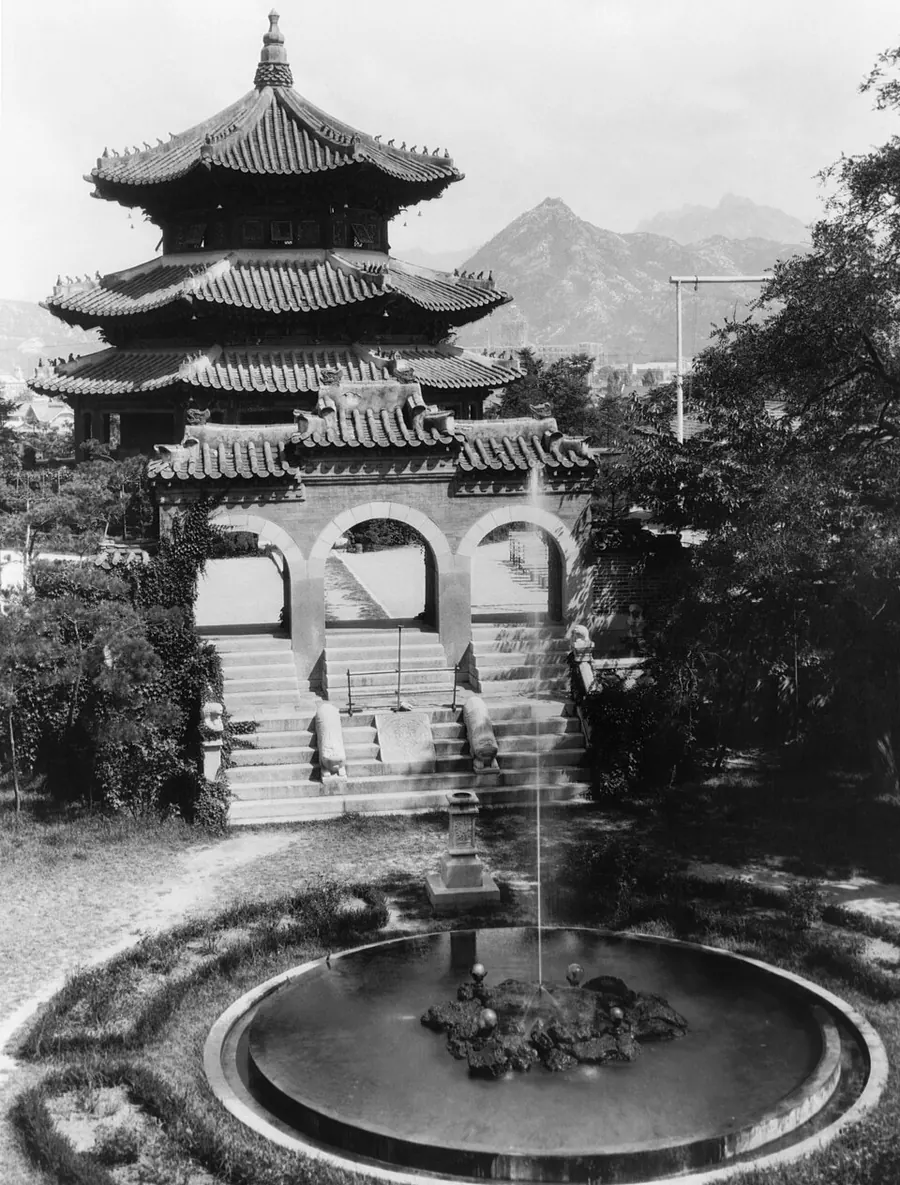
1897 · Korean Empire · Hwanguldan Altar and Gyeongungung Palace, Hanseongbu, Korean Empire
Today: Site of Hwanguldan in Sogong-dong, Jung-gu, Seoul, and Deoksugung Palace
King Gojong, who had returned from the Russian legation in 1897, took the throne as emperor at the Hwanguldan altar on October 12 and renamed the country "Daehan," announcing that it was a self-reliant, independent nation. This state lasted 13 years, until 1910.
What happened
Why did a king make himself emperor? Gojong had stayed at the Russian legation, and he wanted to win back the country's lost dignity. In 1897, at the Hwanguldan altar, he became emperor and renamed the country "Daehan," announcing that it was a self-reliant, independent nation. This state lasted until 1910, and the name "Daehan" lives on in today's Daehanminguk (the Republic of Korea).
More detail
Two sources checked
Why it happened
Why did a man who was a king decide to call himself "emperor"? Gojong stayed at the Russian legation for almost a year, and the country's dignity fell badly. When he returned to Gyeongungung Palace in February 1897, he wanted to show clearly that the country belonged to no other power and stood on its own.
Officials, Confucian scholars and merchants also sent one petition after another asking him to use the title "emperor" to stand on equal terms with other countries. It was like a whole class raising its voice together, "We are a proud class too," when students from other classes look down on yours. Gojong probably felt it was urgent to set the country's name and standing right.
What happened
In August 1897 the new era name "Gwangmu" was chosen. At dawn on October 12, Gojong held a ceremony to the heavens at the newly built Hwanguldan altar in Seoul and took the throne as emperor. The next day, October 13, he officially announced that the country's name had been changed to "Daehan."
"Daehan" carried the meaning of a great country that joined the lands of the old Samhan (the Three Hans) into one. Taegeukgi flags and lanterns hung at every house along the streets. In 1899, the emperor issued the Daehanguk Gukje (the Constitution of the Korean Empire), declaring that the emperor held all powers, over the army, the law, foreign affairs and more. Changing the name was like putting up a new name tag on a new classroom at the start of a school year, a way of announcing a fresh start.
What came of it
The Korean Empire lasted 13 years, until August 1910, when Korea lost its sovereignty to Japan. During this time, a set of modernization projects called the Gwangmu Reforms was carried out.
The name "Daehan" passed through the Provisional Government of the Republic of Korea in 1919 and lives on today in "Daehanminguk," the Republic of Korea. In the name that Koreans say every day is the hope of the people of that time, who wanted their country to stand proud.
People in this event
- Gojong — He took the emperor's seat at Hwanguldan and named the country 'Daehan.'