 BETA
Person
Gojong
1852–1919 · First emperor of the Korean Empire · Joseon
Birth name: Yi Hui
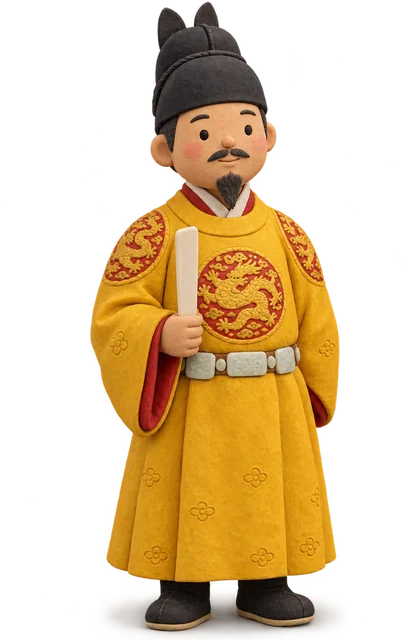
He was the king who opened the country's doors and founded the Korean Empire but could not in the end protect the country.
He was the king of Joseon who became king at the age of 12. He opened the country to other countries, and in 1897 he founded the Korean Empire and became emperor. He never accepted the Eulsa Treaty that Japan forced on Korea, and he secretly sent people to The Hague. But in 1907 he was made to step down because of Japan.
More detail
Two sources checked
Gojong was born in Seoul in 1852 as the second son of Prince Heungseon (later the Heungseon Daewongun). When King Cheoljong died with no son, he became king in 1863 at the age of 12. For the first ten years or so his father, the Heungseon Daewongun, led the affairs of state, and from 1873 Gojong ruled directly.
During Gojong's reign, Joseon opened the country with the Treaty of Ganghwa in 1876 and also made treaties with the United States, Britain, Germany and others. In the meantime, great events followed one after another, such as the Imo Soldiers' Revolt, the Gapsin Coup, the Donghak Peasant Movement and the First Sino-Japanese War.
In 1895 the queen (Empress Myeongseong) was murdered by Japanese men, and the following year Gojong moved his residence to the Russian Legation (the Agwan Pacheon). In 1897 he returned to Gyeongungung Palace (now Deoksugung), changed the name of the country to the 'Korean Empire,' and became emperor. The aim was to proclaim that Korea was an independent state equal to other countries.
In 1905 Japan forced on him the Eulsa Treaty, which took away Korea's diplomatic rights, but Gojong did not recognize it. In 1907 he secretly sent envoys to the World Peace Conference in The Hague, in the Netherlands, and Japan used this as a pretext to force Gojong off the imperial throne. He died in Deoksugung Palace in January 1919, and the March First Movement broke out in the run-up to his funeral.
Life timeline
- 1863Took the throne
- 1873Began to rule directly
Related events
- 1873Heungseon Daewongun Steps Down and Gojong Rules Directly
- 1895Proclamation of the Education Rescript
- 1896Royal Refuge at the Russian Legation
- 1896Independence Club and the Mass Assembly (Manmin Gongdonghoe)
- 1897Gwangmu Reform (Land Survey, Land Deeds, and Promoting Industry)
- 1897Proclamation of the Korean Empire
- 1899Proclaiming the Daehanguk Gukje
- 1899Establishment of the Wonsubu
- 1905Eulsa Treaty (Loss of Diplomatic Rights)
- 1907Forced Abdication of Gojong and Disbandment of the Army
- 1907Dispatch of the Hague Secret Envoys
- 1912Formation of the Dongnip Uigunbu